


Addressing Risk Aversion in Indian Pharma to Accelerate Innovation with AI-Driven Drug Discovery
Explore how AI-driven drug discovery, computational chemistry, and strategic collaborations can help Indian pharma overcome risk aversion and accelerate innovation.
The Indian pharmaceutical sector has long been recognized for its leadership in generic drug manufacturing, contributing substantially to global healthcare affordability and accessibility. However, as the landscape of drug development shifts towards innovation-led growth, risk aversion within the industry is increasingly viewed as a bottleneck hindering breakthrough therapeutics. This apprehension towards risk-taking, compounded by lengthy development timelines and regulatory complexities, limits opportunities to cultivate a robust innovation pipeline essential for sustaining long-term growth.
Kiran Mazumdar-Shaw, chairperson of Biocon, aptly highlights that “the pipeline is the lifeline” of pharma innovation. Sustained development of novel candidates is vital, yet clinical attrition rates remain notoriously high, with only a fraction of drug candidates advancing to regulatory approval. This underscores the necessity to adopt advanced technologies that can mitigate uncertainties and optimize R&D productivity.
The Innovation Challenge in Indian Pharma
Indian pharmaceutical companies primarily fall into three categories: generics, biosimilars and innovation-driven ventures. Generics and biosimilars have formed the backbone of the industry’s growth, especially given India’s cost advantages and manufacturing capabilities. However, these segments face diminishing margins due to intense global competition and pricing pressures. Transitioning towards innovation-focused research demands embracing inherent scientific and commercial risks that many Indian companies currently avoid.
Risk aversion manifests in several ways: limited investment in early-stage discovery, preference for minimal-risk development pathways, reliance on foreign clinical trials (notably animal studies) and slower adoption of novel regulatory frameworks. Such conservative strategies impede the rapid advancement of first-in-class drugs and transformative biologics that would elevate India’s standing as a global pharma innovator.

Leveraging AI and Computational Chemistry to De-risk Innovation
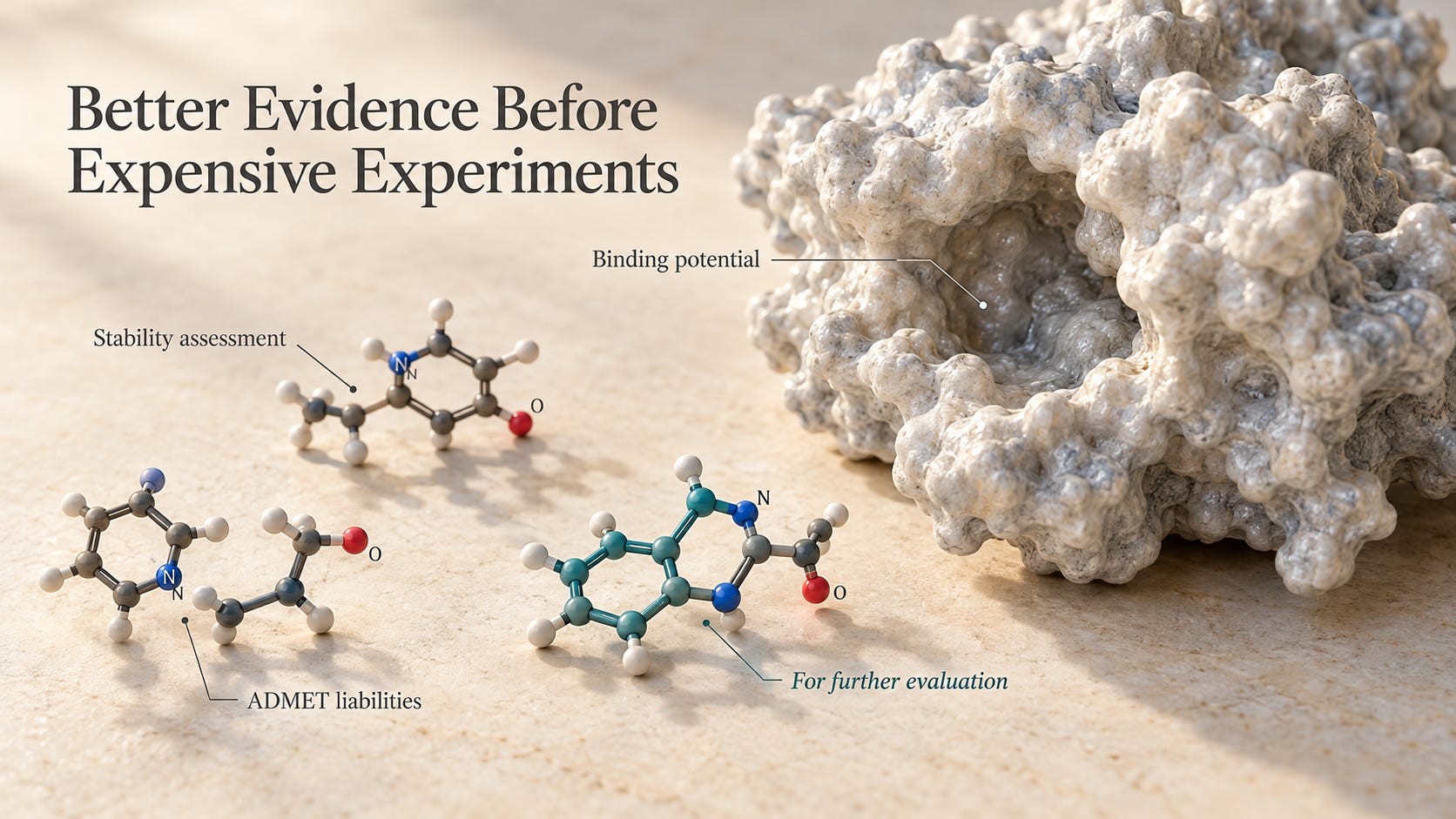
Integrating artificial intelligence (AI), computational chemistry and systems biology into drug discovery processes offers tangible solutions to overcome risk-related barriers. AI-driven molecular modeling, fragment-based drug design and free energy perturbation (FEP) simulations can efficiently predict molecule-protein interactions, optimize lead candidates and reduce costly experimental iterations.
Medvolt exemplifies how embedding AI-centric platforms into R&D pipelines can accelerate target identification and candidate optimization while decreasing both time and financial investments. AI algorithms trained on multi-omics databases and real-world pharmacological data enable precise knowledge curation, streamlining hypothesis generation and decision-making.
Several advantages of adopting these computational approaches include:
- Enhanced Predictive Accuracy: AI models, leveraging deep learning and ensemble methods, can forecast ADMET (absorption, distribution, metabolism, excretion and toxicity) properties early, flagging potential liabilities before costly synthesis.
- Fragment-Based and Structure-Guided Design: Computational fragment screening expedites the assembly of high-affinity ligands, particularly relevant for challenging targets where classical high-throughput screening may falter.
- Cost and Time Efficiency: Virtual screening and in silico docking substantially reduce the need for extensive bench work in initial discovery stages, thereby lowering R&D expenditures.
- Continuous Pipeline Renewal: Automation and AI-enhanced workflows support iterative design cycles and rapid progression from hit-to-lead, which is critical to maintaining a dynamic and productive pipeline.
Regulatory and Ecosystem Considerations
Mazumdar-Shaw’s observations regarding progress in India’s regulatory alignment underscore a positive trend. Streamlined clinical trial approvals, adoption of digital health records and guidance on integrating real-world evidence are emerging enablers that can synergize with AI-driven R&D to accelerate molecule progression from bench to bedside.
However, to fully capitalize on these advancements, Indian pharma must also address operational gaps such as the reliance on overseas animal studies and fragmented biopharma infrastructure. Cultivating domestic capabilities in preclinical modeling, combined with advanced computational platforms, will facilitate a more self-reliant and innovation-friendly ecosystem.

Strategic Collaborations and Knowledge Integration
Industry leaders acknowledge that building scale in innovation requires strategic partnerships, licensing and acquisitions. For example, Sun Pharma’s acquisition of Organon exemplifies leveraging global capabilities for faster market access to innovative drugs. Complementing such approaches, AI and computational technologies empower even smaller innovation-driven enterprises to compete effectively by reducing entry barriers in early discovery phases.
Medvolt advocates for holistic integration of AI-driven knowledge management with wet-lab experimentation, fostering cross-disciplinary collaboration between computational scientists, biologists and clinicians. This confluence enhances target validation, biomarker identification and mechanism-of-action elucidation—key milestones in ideating novel therapeutics.

Outlook: From Incremental to Transformational Innovation
As India aspires to become a global hub for pharmaceutical innovation by 2047, bolstering risk-taking capacity through intelligent technology adoption will be indispensable. Indian pharma’s historical strength in generics provides a strong foundation, but achieving meaningful breakthroughs in novel modalities, precision medicine and biologics necessitates evolving R&D paradigms.
AI-driven computational drug discovery platforms, such as those developed by Medvolt, represent a pragmatic yet forward-looking methodology to de-risk innovation while maintaining scientific rigor. Embracing these tools facilitates the efficient exploration of chemical space, robust prediction of molecular properties and streamlined knowledge curation across multi-omics data layers.
Ultimately, advancing from a risk-averse mindset towards one that leverages technology-enabled precision will catalyze the sector’s transformation. It will unlock opportunities to develop new drugs that not only address unmet medical needs but also position Indian pharmaceutical companies as pioneers in the next wave of global healthcare innovation.

