


Airborne Drying, DNA Damage and Drug Resistance in Tuberculosis: Mechanistic Insights and AI-driven Innovations
Explore how airborne drying causes DNA damage and drug resistance in tuberculosis, and how AI-driven drug discovery can support next-generation TB therapies.
Tuberculosis (TB), caused by the bacterium Mycobacterium tuberculosis (Mtb), remains a global health challenge, particularly due to the emergence of drug-resistant strains. Recent studies have illuminated a crucial environmental stress factor airborne drying and its impact on the bacterial DNA integrity, potentially accelerating the onset of drug resistance. Understanding this phenomenon at a molecular level is essential for developing effective therapeutics. This article examines the link between airborne drying, DNA damage and drug resistance in TB bacteria, underscoring the role of computational methods and AI-driven drug discovery platforms in tackling these challenges.
Airborne Drying and Its Impact on Mtb Viability and Genetics
When M. tuberculosis is expelled into the air through coughing or sneezing, it encounters dehydration in aerosolized droplets a process known as airborne drying. Although bacterial survival in such dry environments was previously underestimated, recent experimental evidence has demonstrated that airborne drying induces oxidative stress, subsequently damaging the bacterial DNA.
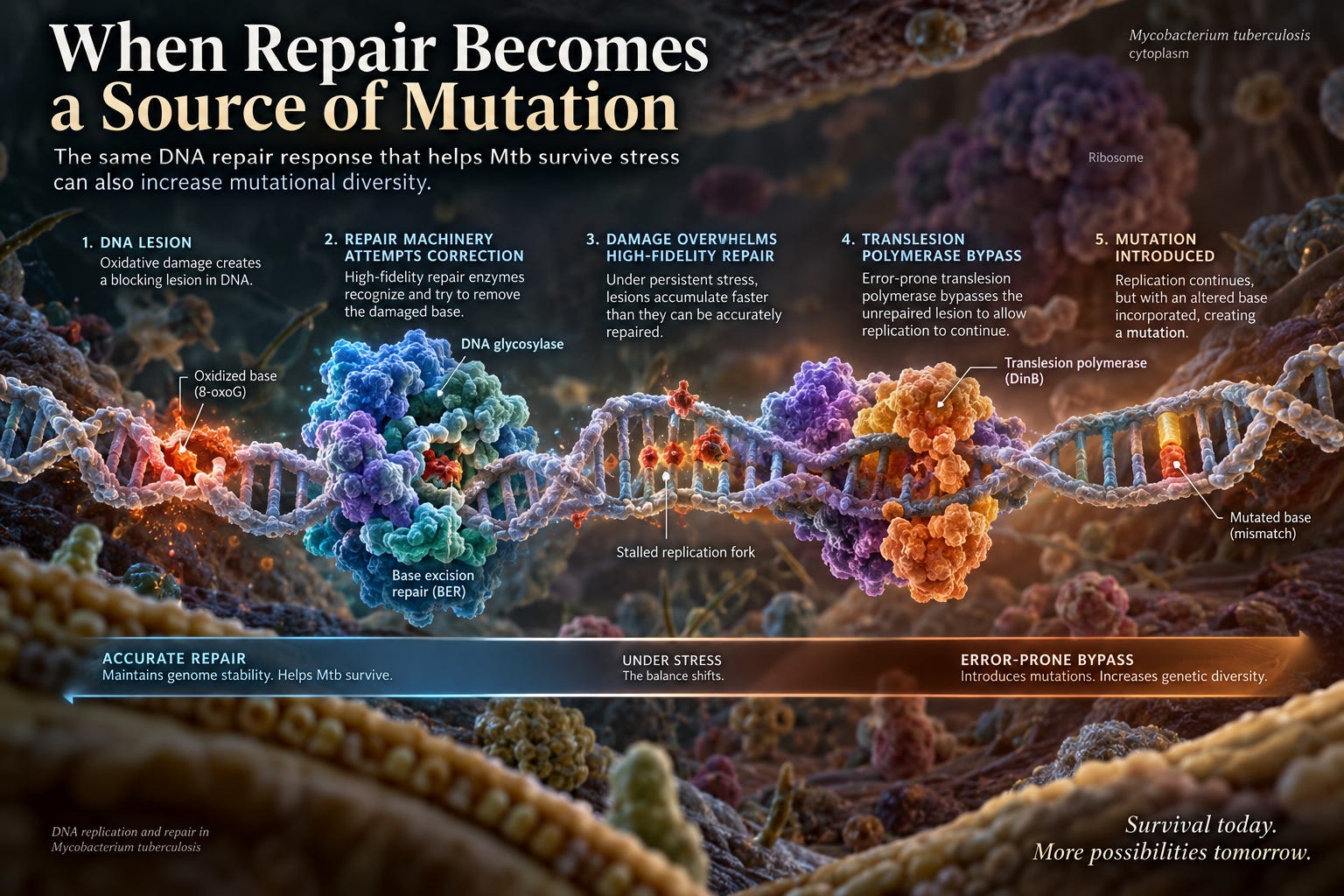
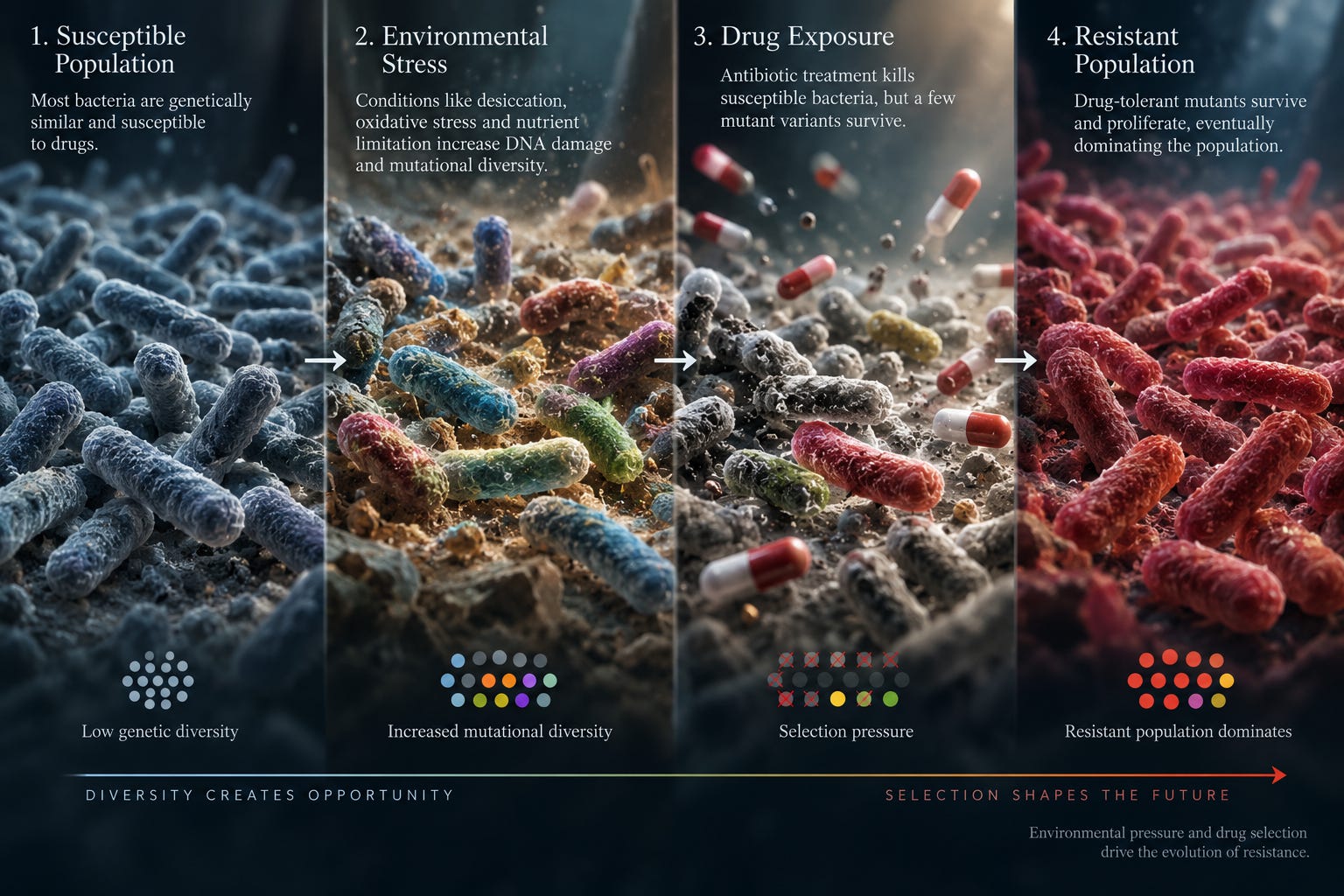
Oxidative DNA damage, notably through reactive oxygen species (ROS) generated during dehydration, leads to strand breaks and mutagenesis. This DNA damage activates bacterial repair pathways, including error-prone mechanisms such as translesion synthesis, which increase the mutation rate. The elevated mutational burden facilitates the emergence of mutations conferring resistance to frontline TB drugs like isoniazid and rifampicin.
Understanding how environmental stresses potentiate drug resistance at the molecular level is pivotal for designing intervention strategies targeting dormant or resistant bacterial populations.
Molecular Mechanisms Underpinning DNA Damage and Repair in Mtb
M. tuberculosis has evolved complex DNA repair systems to counteract environmental genotoxic stress. However, under the combined pressure of airborne drying and oxidative damage, these repair pathways can become a double-edged sword. While they maintain genomic integrity to ensure survival, the error-prone nature of certain repair processes inadvertently introduces mutations.
Specifically, nucleotide excision repair (NER) and base excision repair (BER) pathways attempt to excise damaged bases. When overwhelmed, the replication machinery relies on translesion polymerases, which bypass lesions but with reduced fidelity. This increases genomic plasticity, enabling the bacterium to adapt rapidly but also to acquire mutations in drug target genes or efflux pump regulators, fostering multidrug resistance.
Challenges in Conventional Drug Discovery Against Resistant TB
Traditional TB drug discovery faces challenges due to the complex physiology of the bacterium, the thick mycolic acid-rich cell wall and the capacity for rapid genetic adaptation. The discovery pipeline is further complicated by the need for drugs active against latent and drug-resistant Mtb strains, often residing in hypoxic or nutrient-deprived granulomas.
Target-based screening requires extensive biochemical and structural data on Mtb enzymes, some of which are only expressed under stress conditions such as airborne drying-induced DNA damage. Phenotypic screens risk missing mechanistic insights essential for overcoming resistance.
Medvolt’s AI-Driven Approach to Elucidating Molecular Mechanisms and Accelerating Drug Discovery
Medvolt leverages AI-driven molecular modeling, including free energy perturbation (FEP) simulations and fragment-based drug design, to probe key Mtb proteins implicated in DNA repair and stress response pathways. Computational chemistry tools enable the prediction of binding affinities and conformational dynamics of candidate molecules under physiological and stress-mimicking conditions.
By integrating multi-omics data from transcriptomics and proteomics studies on airborne-dried Mtb cells, Medvolt’s AI algorithms identify novel drug targets within the DNA repair machinery and oxidative stress response networks. These include error-prone polymerases and regulatory proteins modulating mutation rates.
The platform also models protein-ligand interactions with mutant proteins derived from resistant strains, providing a tailored strategy to design compounds less vulnerable to resistance mechanisms. Such precision accelerates lead optimization and reduces attrition rates in preclinical stages.
Knowledge Curation and Predictive Modeling for Improved Therapeutic Design
Medvolt’s knowledge curation capabilities systematically assimilate literature and experimental data linking environmental stress factors, bacterial genomics and pharmacodynamics. AI-driven natural language processing extracts actionable insights, enabling the identification of genotype–phenotype correlations that underpin resistance emergence after airborne drying events.
Predictive modeling further simulates bacterial population dynamics within host environments, incorporating stress-induced mutation rates. This informs dosing regimens and combinatorial therapies aimed at minimizing resistance selection.
Implications for Global TB Control and Future Research Directions
Recognizing airborne drying as a driver of DNA damage and mutagenesis opens new avenues for anti-TB strategies. Targeting the bacterial stress response and error-prone repair systems holds promise to both sensitize bacteria and suppress resistance emergence.
Future research integrating AI-driven simulations with in vitro and in vivo models will refine our understanding of stress-mediated drug resistance. Such multidisciplinary approaches are critical for next-generation TB therapeutics that remain effective amidst evolving bacterial resilience.
Conclusion
In summary, airborne drying induces oxidative DNA damage in M. tuberculosis, activating mutagenic repair pathways that facilitate drug resistance. Addressing these molecular mechanisms through AI-driven drug discovery platforms, such as those developed by Medvolt, offers a strategic pathway to design robust therapeutics targeting the bacterial stress adaptations. By combining computational chemistry, multi-omics integration and predictive modeling, Medvolt contributes to a more informed, efficient search for resistant TB therapies, reinforcing efforts to curb one of humanity’s oldest infectious scourges.

