Artificial Enzymes: Why Catalytic Antibodies and Designed Proteins Are Changing Drug Discovery
Artificial enzymes, catalytic antibodies, and designed proteins are expanding therapeutic possibilities through AI-driven protein engineering.
How Computational Biology Is Expanding the Definition of Therapeutics Beyond Traditional Enzymes
For decades, enzymes have been among nature’s most remarkable molecular machines. They catalyze chemical reactions with extraordinary speed, selectivity, and efficiency, regulating metabolism, repairing DNA, synthesizing biomolecules, and maintaining life itself. Their capabilities have also made them valuable therapeutic agents in applications ranging from enzyme replacement therapies to cancer treatments.
However, natural enzymes evolved to support biological survival—not to address modern medical challenges such as targeting cancer-specific pathways, degrading disease-causing proteins, or catalyzing entirely new therapeutic reactions. This limitation has inspired a new question in biotechnology: What if we could design entirely new enzymes or create proteins capable of catalytic functions that nature never evolved? Advances in artificial intelligence, protein engineering, structural biology, and computational design are making that possibility increasingly achievable.
Beyond Natural Evolution
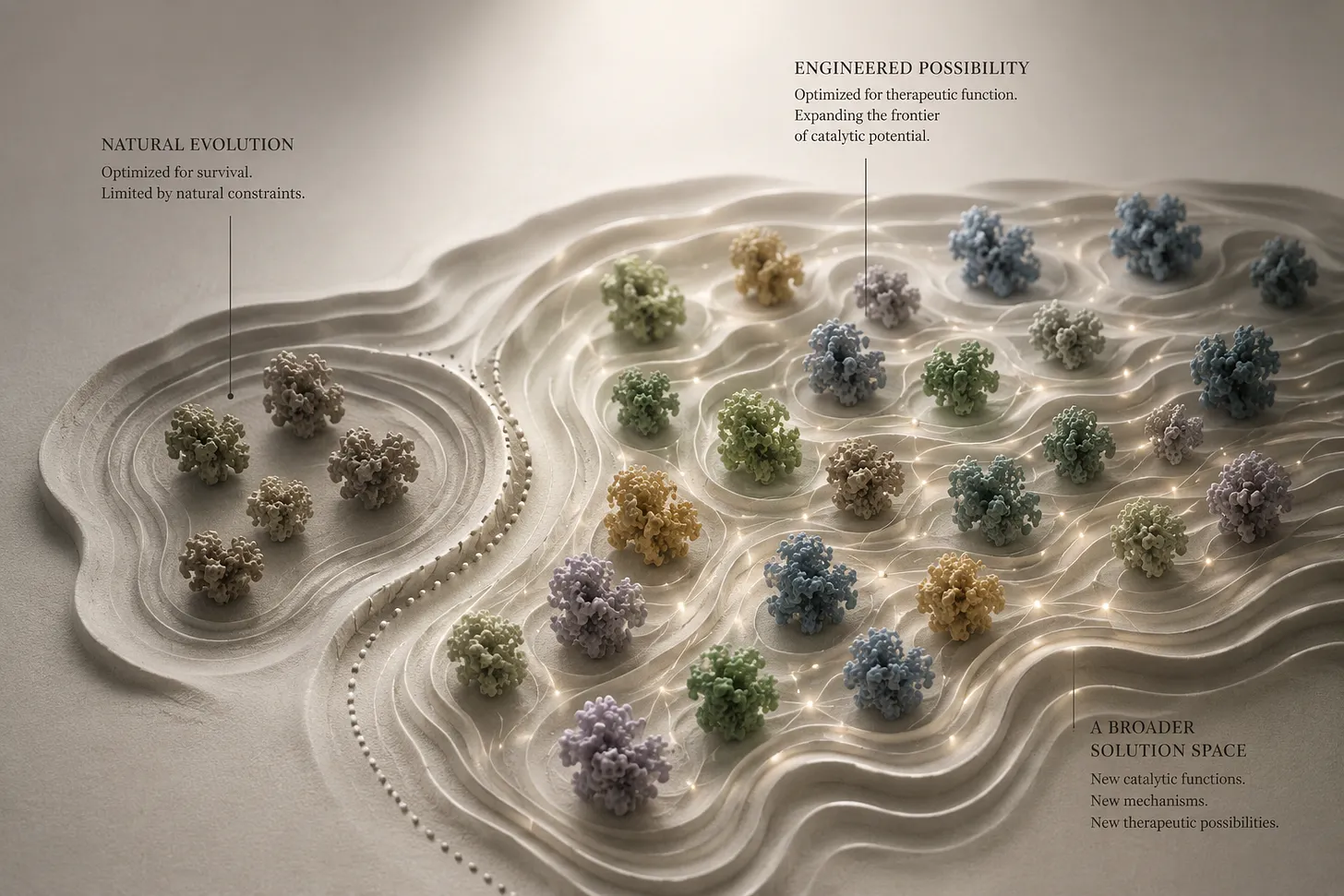
Nature has spent billions of years optimizing enzymes, but evolution prioritizes survival rather than therapeutic utility. Many naturally occurring enzymes suffer from limitations such as poor manufacturing stability, unwanted immune responses, broad substrate specificity, or an inability to catalyze medically relevant reactions.
Traditional protein engineering methods, including directed evolution and rational mutagenesis, have successfully improved protein function. However, these approaches are highly iterative and experimentally intensive, requiring repeated cycles of mutation and laboratory validation while exploring only a small fraction of the available protein design space.
The Rise of Artificial Enzymes
Artificial enzymes represent a fundamentally different approach to protein engineering. Rather than making incremental improvements to existing proteins, researchers are increasingly designing catalytic systems with predefined functions tailored to specific therapeutic goals.
These systems may include:
- Redesigned natural enzymes
- De novo designed proteins
- Catalytic antibodies
- Computationally engineered mini-proteins
- Hybrid catalytic scaffolds
Instead of asking how to improve an existing enzyme, scientists are now asking what protein should exist to perform a desired reaction most effectively. This shift transforms protein engineering from an optimization problem into a true design challenge.
Catalytic Antibodies: When Recognition Meets Catalysis
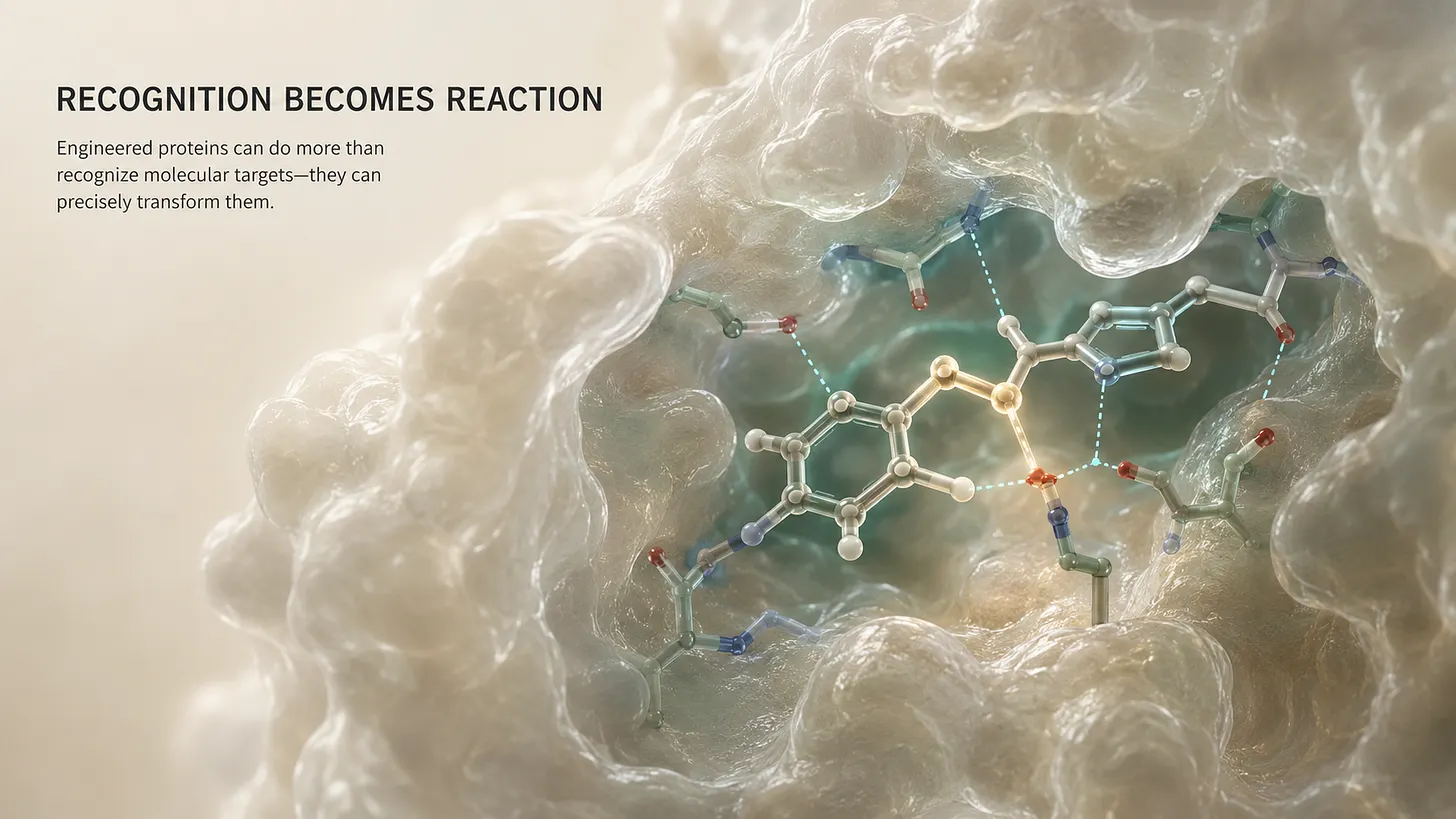
Catalytic antibodies, commonly known as abzymes, were among the earliest examples of artificial catalytic systems. Traditional antibodies are highly specific in recognizing molecular targets but generally lack catalytic capabilities. Catalytic antibodies combine target recognition with the ability to accelerate chemical reactions by stabilizing reaction transition states.
Although catalytic antibodies have not yet achieved widespread clinical adoption, they demonstrated a critical principle: catalysis is not exclusive to naturally evolved enzymes. Protein scaffolds can be engineered to perform entirely new chemical functions, laying the foundation for modern computational enzyme design.
Computational Design Is Changing the Landscape
Historically, designing proteins from first principles was extraordinarily difficult because protein function depends on complex interactions among amino acid sequences, three-dimensional structures, molecular dynamics, stability, substrate recognition, and catalytic chemistry. Even minor structural changes can dramatically affect protein function.
Modern computational biology and AI have transformed this process. Researchers can now:
- Predict protein structures with remarkable accuracy.
- Generate entirely new protein backbones.
- Optimize amino acid sequences.
- Evaluate structural stability.
- Explore vast regions of protein sequence space.
By computationally designing and prioritizing protein variants before laboratory experiments, researchers can significantly accelerate protein engineering while reducing experimental costs and timelines.
Why Dynamics Matter More Than Structure
Designing an artificial enzyme involves more than creating a stable protein structure. Catalysis is a dynamic process that depends on conformational changes that position substrates, stabilize transition states, regulate access to active sites, and facilitate product release.
A protein may appear structurally correct yet fail to function catalytically if its molecular dynamics are unfavorable. Consequently, modern enzyme engineering increasingly relies on understanding how proteins behave over time. Molecular dynamics simulations have become essential tools for evaluating conformational flexibility, substrate positioning, active-site accessibility, and structural stability under biologically relevant conditions.
The Challenge of Designing Function
Predicting protein structure is a major scientific achievement, but designing protein function remains significantly more challenging. Catalytic activity requires the precise positioning of amino acid residues, appropriate electrostatic environments, proper substrate orientation, favorable reaction energetics, and transition-state stabilization.
Successful artificial enzyme engineering integrates multiple computational disciplines, including:
- Sequence generation
- Structural prediction
- Molecular docking
- Substrate modeling
- Molecular dynamics simulations
- Energetic and thermodynamic analyses
The challenge is no longer determining whether a protein will fold correctly—it is determining whether it can perform the desired chemistry efficiently and reliably.
Therapeutic Opportunities Beyond Natural Biology
Artificial enzymes are creating opportunities that extend far beyond improving existing therapeutics. Designed proteins are being explored for applications that were previously impossible using naturally occurring enzymes.
Potential therapeutic applications include:
- Degrading disease-causing metabolites
- Selectively modifying pathogenic proteins
- Catalyzing reactions absent in human biology
- Improving enzyme replacement therapies
- Developing programmable biologics with novel mechanisms of action
These innovations have significant implications across oncology, metabolic disorders, rare genetic diseases, autoimmune conditions, and infectious diseases. The field is steadily moving toward designing proteins specifically for therapeutic challenges rather than adapting proteins evolved for entirely different biological purposes.
Medvolt’s Approach: AI-Driven Protein Engineering Beyond Sequence Design
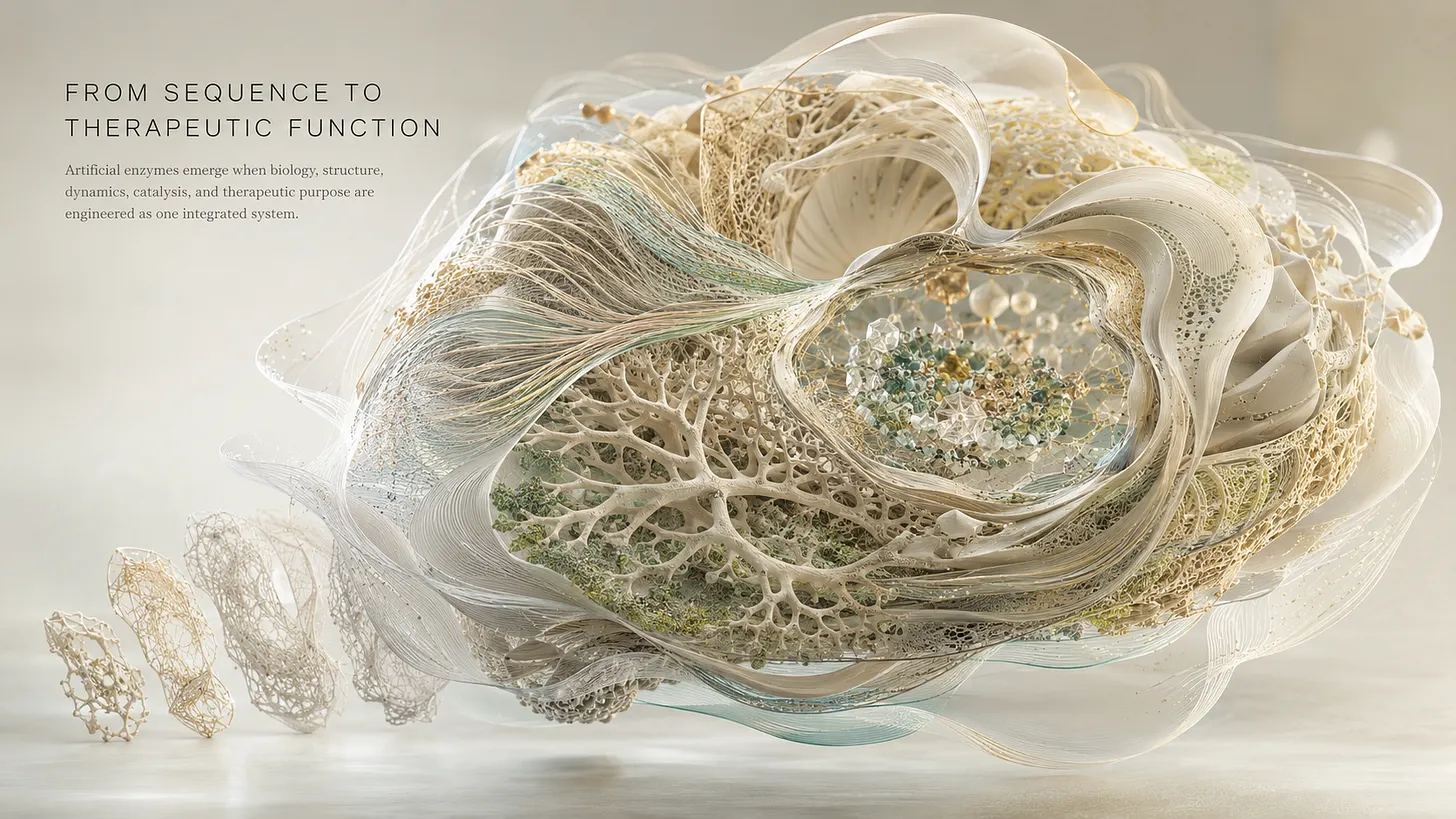
At Medvolt, artificial enzyme engineering is approached as a multidisciplinary problem that extends beyond sequence generation. Designing catalytic proteins requires understanding the complex interactions among sequence, structure, dynamics, thermodynamics, and biological function within a unified framework.
Our workflows begin by integrating biological knowledge from scientific literature, disease mechanisms, structural databases, and protein-function relationships. Protein variants are explored using generative AI models and structure-aware computational methods that evaluate folding, substrate recognition, and active-site architecture before progressing through iterative computational refinement.
For enzyme engineering projects, our integrated workflow simultaneously considers multiple design objectives, including:
- Catalytic efficiency
- Substrate specificity
- Structural stability
- Reduced immunogenicity
- Manufacturability
- Therapeutic relevance
Rather than relying on isolated computational models, Medvolt combines biological intelligence, AI-guided design, structural modeling, molecular docking, molecular dynamics simulations, and physics-based validation into connected discovery workflows that support rational protein engineering from concept through candidate prioritization.
The Future of Catalytic Therapeutics
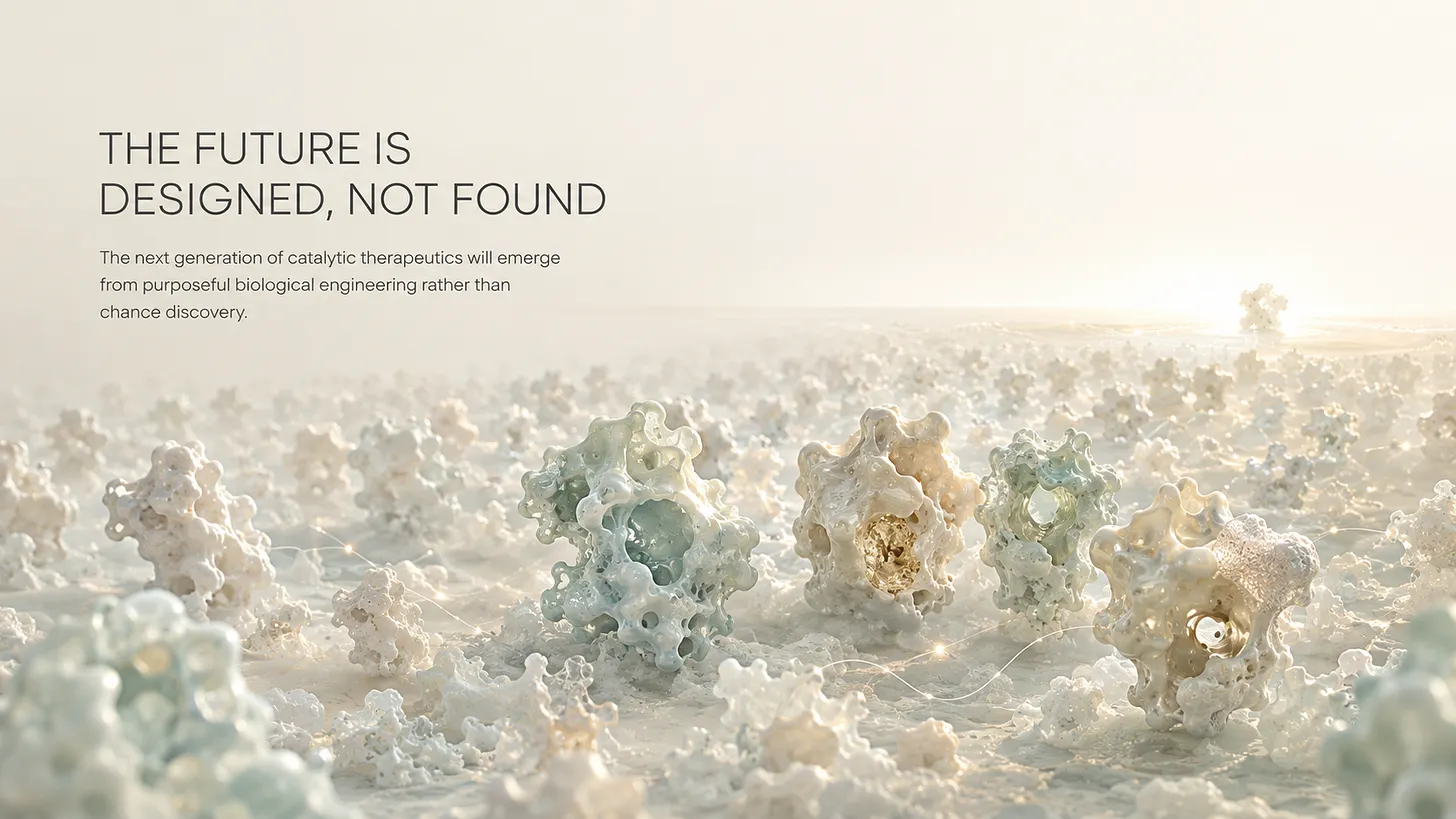
Artificial enzymes represent more than an incremental advancement in biotechnology they represent a fundamental shift in therapeutic design philosophy. Historically, researchers searched nature for proteins capable of addressing medical problems. Increasingly, the future lies in designing those proteins ourselves.
Advances in generative AI, protein language models, structural prediction, molecular simulation, and high-throughput experimental validation are expanding what is scientifically possible. As these technologies mature, the distinction between naturally evolved enzymes and computationally designed catalysts will continue to diminish, enabling therapeutics specifically engineered for targeted disease mechanisms.
Conclusion
Artificial enzymes, catalytic antibodies, and designed proteins are redefining the possibilities of drug discovery. By combining artificial intelligence with structural biology, molecular simulation, and protein engineering, researchers are moving beyond modifying existing enzymes toward designing entirely new catalytic systems tailored for therapeutic applications.
At Medvolt, this vision drives our AI-powered protein engineering approach. By integrating biological knowledge, generative protein design, structural modeling, molecular dynamics, and physics-based validation into a unified workflow, we aim to accelerate the development of next-generation therapeutic proteins that are both biologically meaningful and translationally relevant. The future of enzyme engineering will not be limited by what nature has already built—it will be defined by what science is now capable of designing.