


Beyond Scale: Harnessing AI and Genetics to Identify WNK2 Inhibitors for Osteoarthritis Treatment
Explore how AI, genetics and molecular modeling help identify WNK2 inhibitors as potential disease-modifying therapies for osteoarthritis.
Osteoarthritis (OA) represents a significant unmet medical need as the most common degenerative joint disease worldwide. Characterized by progressive cartilage degradation, subchondral bone remodeling, and synovial inflammation, OA leads to chronic pain and loss of mobility affecting millions globally. Conventional treatments primarily focus on symptom management, underscoring the urgent need for disease-modifying therapies. Recent advances in integrating artificial intelligence (AI) with genetic and molecular biology have created innovative paths to identify novel therapeutic targets. One such promising target is the WNK2 kinase, whose modulation may offer new strategies for OA intervention.
The Role of WNK2 in Osteoarthritis Pathophysiology
WNK2 (With-No-Lysine [K] kinase 2) is part of the WNK kinase family, involved in regulating ion transport and cellular signaling pathways. While extensively studied in the context of hypertension and renal physiology, emerging genetic and transcriptomic analyses reveal WNK2’s implications in cartilage homeostasis and inflammatory processes relevant to OA. Differential expression studies of OA patient cartilage samples have demonstrated altered WNK2 activity correlating with disease severity. This suggests that selective inhibition of WNK2 could modulate aberrant signaling cascades contributing to cartilage degradation and inflammation.
Integrating Multi-Omics and AI for Target Validation
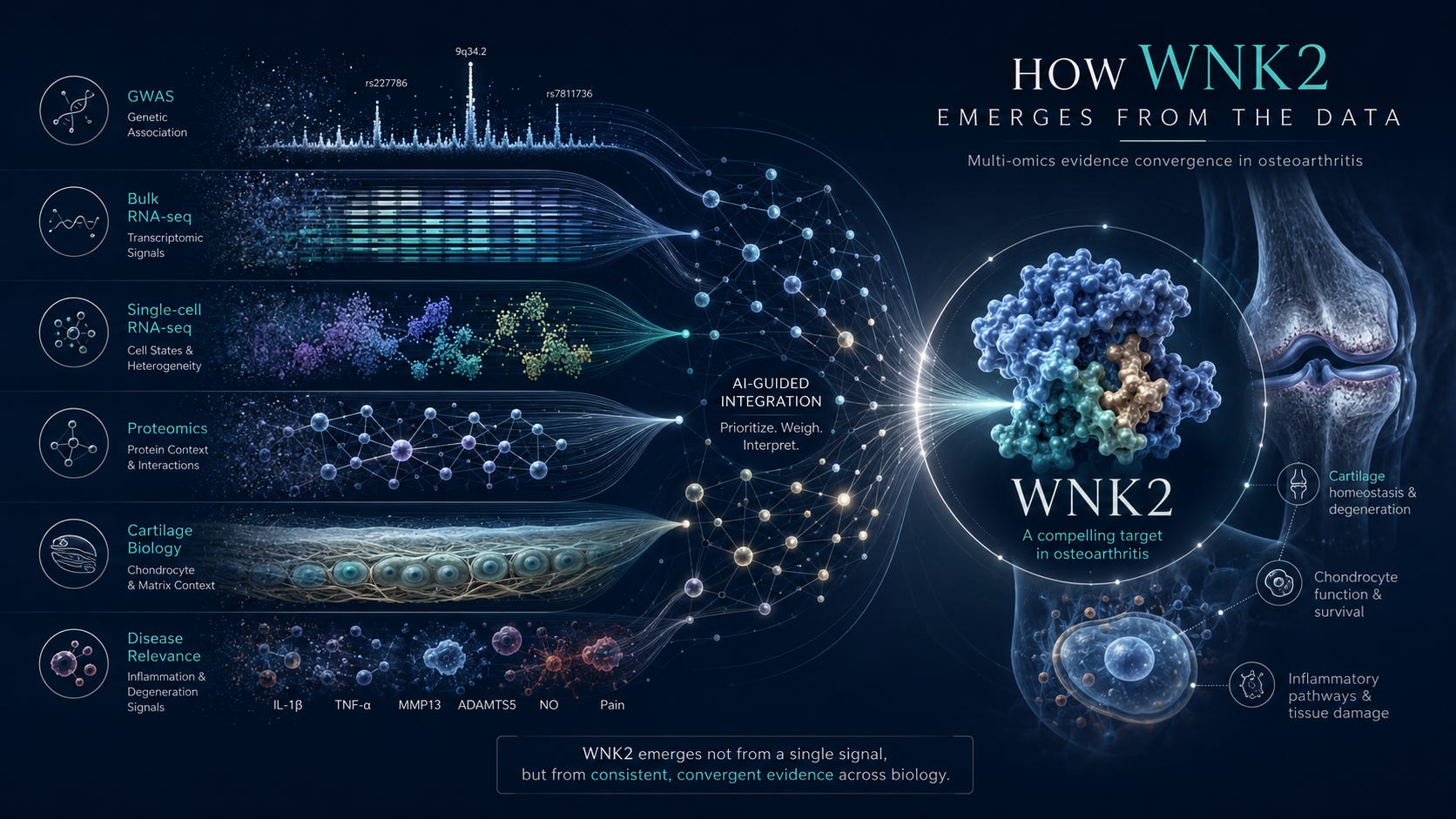
The complexity of OA necessitates a multi-layered approach combining genomics, transcriptomics, and proteomics with AI-driven analytics. Through bulk and single-cell RNA sequencing data sets from osteoarthritic tissues, researchers have mapped WNK2 regulatory networks, highlighting downstream effectors impacting extracellular matrix remodeling and chondrocyte survival. AI-powered bioinformatics platforms enable robust feature extraction from these high-dimensional data sets, uncovering novel gene-drug interactions and mechanistic insights.
Medvolt’s AI pipelines integrate genome-wide association studies (GWAS) with machine learning algorithms that prioritize targets based on genetic linkage, expression patterns, and disease relevance. This target-centric approach enhances confidence in WNK2 as a viable focus for therapeutic development.
AI-Assisted Compound Screening and Molecular Modeling
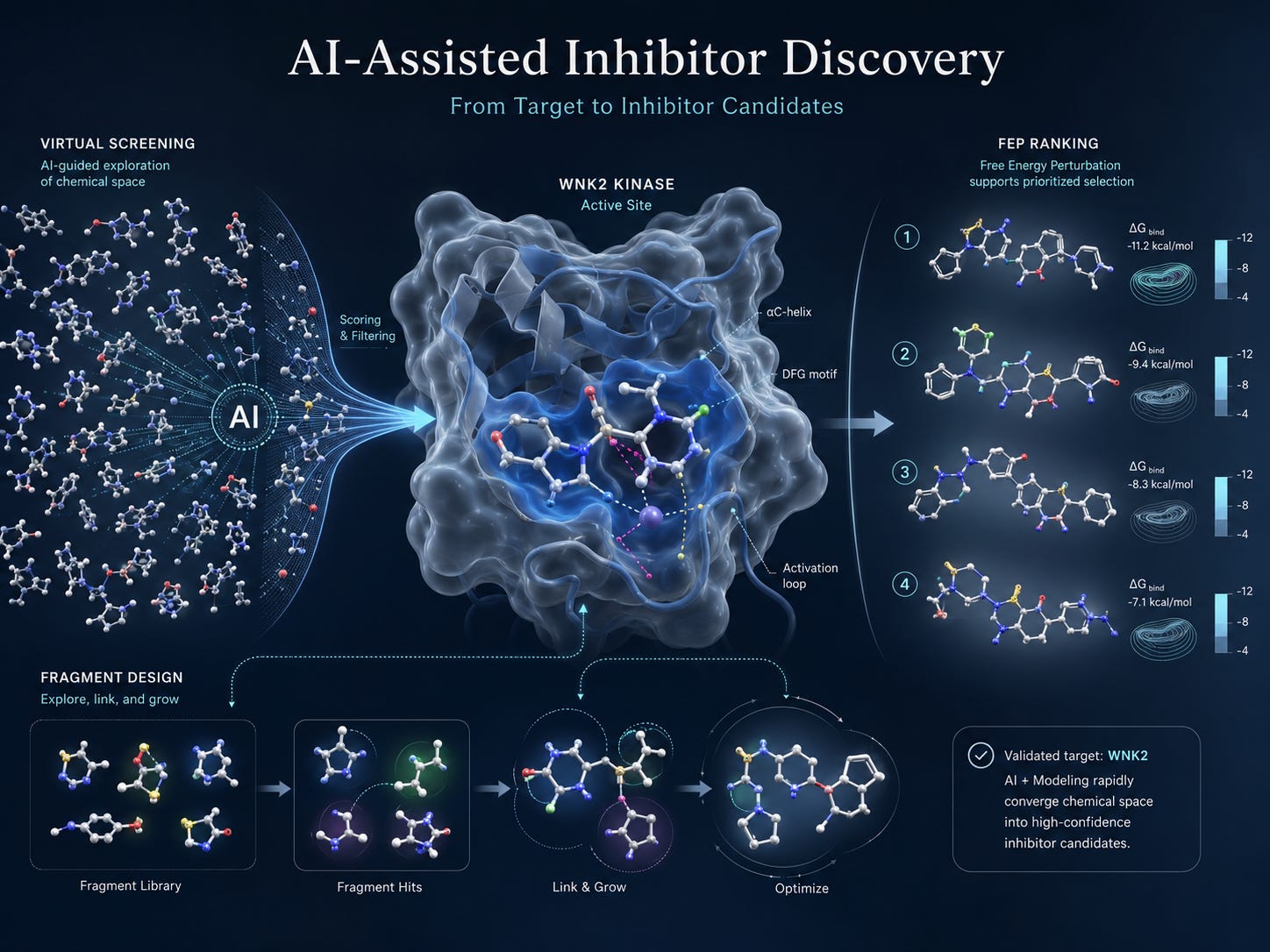
Following target validation, the identification of potent WNK2 inhibitors hinges on efficient compound screening and binding affinity prediction. Traditional high-throughput screening is resource-intensive and often limited by chemical space coverage. Medvolt leverages AI-enabled virtual screening frameworks that utilize deep learning models trained on kinase inhibitor databases to predict binding probabilities across vast compound libraries.
Key to this approach is AI-driven molecular docking complemented by free energy perturbation (FEP) simulations. These simulation techniques facilitate precise estimation of ligand-protein interaction energetics, enabling ranking of candidates by predicted potency and selectivity. Fragment-based drug design further refines molecular candidates by identifying small, high-affinity chemical fragments binding to the WNK2 active site, which are then computationally linked or grown into larger compounds with optimized pharmacodynamic properties.
Validation Through In Silico and In Vitro Methods
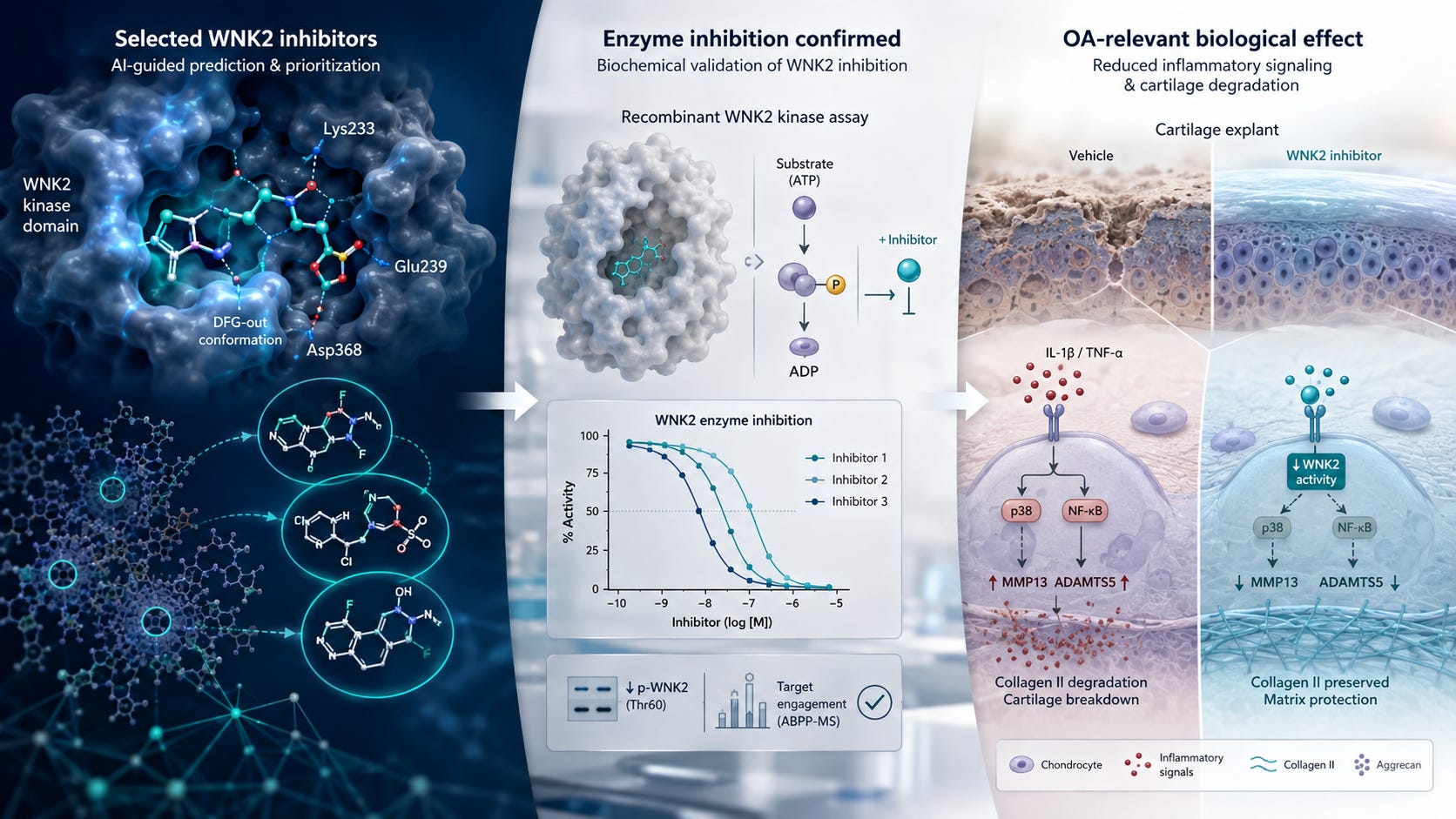
The iterative cycle of AI prediction and experimental validation ensures translational relevance. Potential WNK2 inhibitors identified through Medvolt’s computational workflows undergo biochemical assays to assess enzyme inhibition kinetics and cellular models of OA to evaluate efficacy in modulating pathological phenotypes. Early-stage validation confirms the ability of selected compounds to reduce cartilage matrix degradation markers and inflammatory cytokine production.
Integrating computational predictions with phenotypic assays reduces attrition rates during lead optimization and accelerates progression toward preclinical development.
Broader Implications for AI-driven Drug Discovery in Osteoarthritis
The successful identification of WNK2 inhibitors underscores the transformative role of AI combined with genetics in unraveling complex diseases like osteoarthritis. This paradigm enhances target discovery efficiency, optimizes compound selection, and provides mechanistic insights foundational for rational drug design.
For pharmaceutical and biotechnology stakeholders, these advances present compelling opportunities to develop disease-modifying OA therapies beyond conventional symptomatic agents. By harnessing Medvolt’s AI-driven platforms, researchers can navigate the multifactorial nature of OA and tailor therapeutics addressing underlying molecular drivers.
Conclusion
The intersection of AI and genetics offers promising avenues for identifying novel therapeutic targets such as WNK2 in osteoarthritis. Through sophisticated data integration, molecular modeling, and iterative validation, Medvolt’s approaches illuminate pathways to develop selective WNK2 inhibitors poised to modify disease progression. As the landscape of OA research evolves, AI-driven biotechnology will increasingly catalyze the translation of genetic discoveries into impactful clinical interventions, setting new standards for precision medicine in degenerative joint diseases.

