Bridging Preclinical Insights and Clinical Decisions: The Role of Biomedical Knowledge Graphs in Translational Medicine
Biomedical knowledge graphs integrate fragmented molecular and clinical data to support target discovery, biomarker identification, and translational decisions.
The Challenge of Fragmented Data in Translational Medicine
Translational medicine aims to convert molecular and preclinical discoveries into effective clinical interventions. However, this process is often hindered by the fragmented nature of biomedical data. Information relevant to translational research spans multiple scales—from molecular and cellular data to clinical phenotypes and population-level observations. These data are typically stored in disparate silos, formatted inconsistently, and annotated with varying terminologies. Such heterogeneity complicates comprehensive analysis and impedes the generation of coherent hypotheses necessary for informed decision-making.
This fragmentation creates a critical bottleneck: how can researchers systematically integrate and interpret multi-scale biomedical data to bridge preclinical findings with clinical applications? Addressing this challenge requires structured frameworks capable of representing complex biological relationships and enabling computational inference.
Architectural Foundations of Biomedical Knowledge Graphs
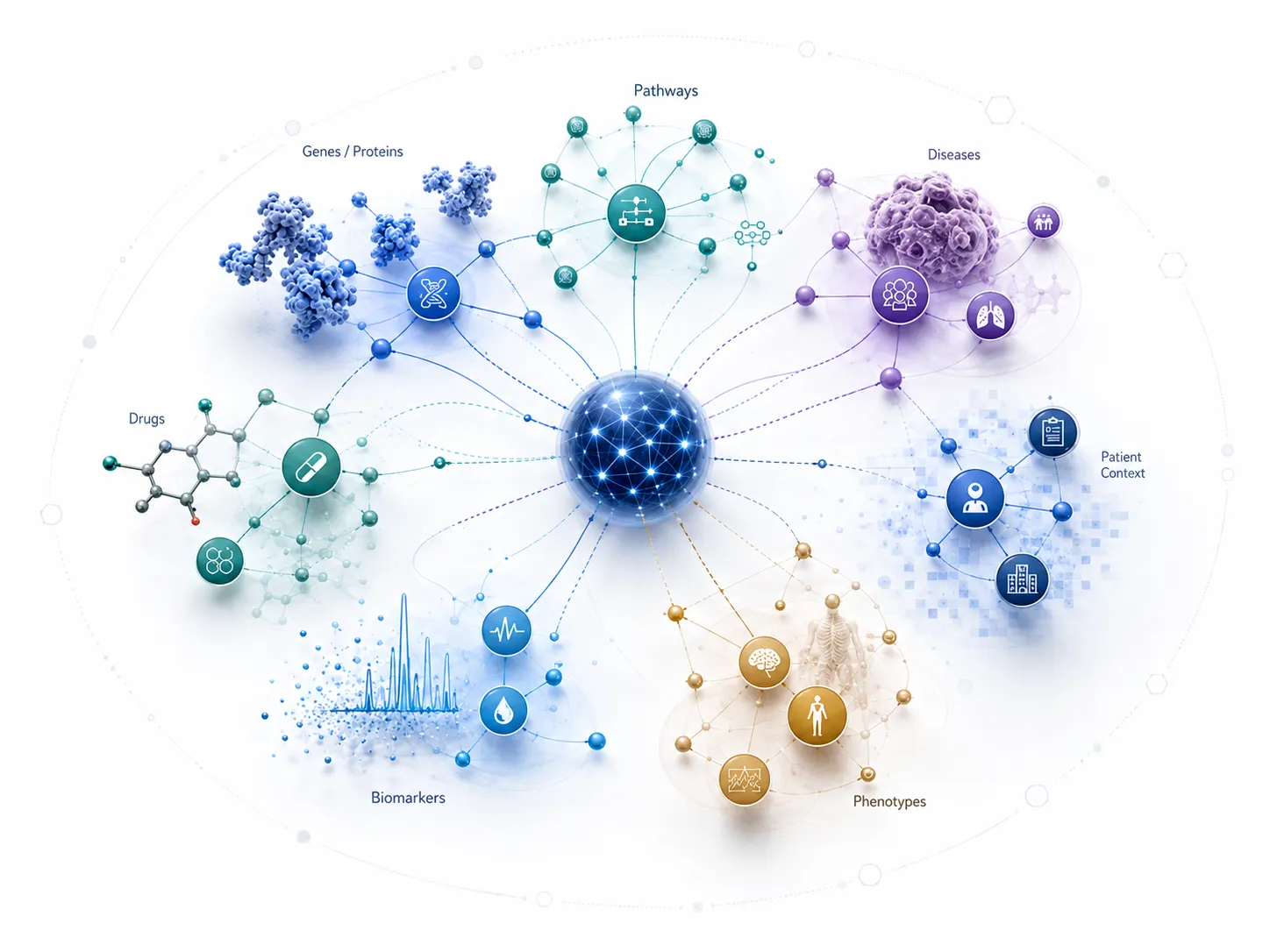
Biomedical knowledge graphs (KGs) offer a structured approach to represent and integrate heterogeneous biomedical data. At their core, these graphs consist of nodes and edges:
- Nodes represent biomedical entities such as genes, proteins, diseases, drugs, pathways, and phenotypes.
- Edges encode diverse relationships between these entities, including molecular interactions, genetic associations, therapeutic indications, and phenotypic correlations.
To ensure semantic interoperability, knowledge graphs leverage ontologies and controlled vocabularies that provide standardized definitions and hierarchical classifications. This semantic layering enables consistent interpretation across data sources and supports meaningful integration.
By organizing biomedical knowledge into multi-relational networks, knowledge graphs capture the complexity of biological systems and clinical contexts in a form amenable to computational analysis.
Computational Strategies for Constructing and Analyzing Biomedical Knowledge Graphs
Building a biomedical knowledge graph involves several computational steps:
Entity Recognition and Normalization
Extracting biomedical entities from heterogeneous sources such as scientific literature, databases, and clinical records requires natural language processing and data curation. Normalization aligns entity mentions to standardized identifiers, ensuring consistency.
Relationship Extraction
Diverse relationships are identified through text mining, database integration, and experimental datasets. These relationships are encoded as edges with defined types and attributes.
Graph Analytics
Once constructed, knowledge graphs support various analytical methods:
- Link Prediction estimates potential but unobserved relationships, aiding hypothesis generation.
- Node Ranking algorithms prioritize entities based on connectivity and relevance.
- Subgraph Mining identifies biologically meaningful modules or pathways.
Machine Learning Integration
Advanced machine learning models augment inference by learning patterns within graph structures, improving scoring and prioritization of targets, biomarkers, or drug candidates.
These computational techniques collectively enable the transformation of fragmented data into coherent, actionable knowledge representations.
Translational Medicine Applications Empowered by Knowledge Graphs
Biomedical knowledge graphs have demonstrated utility across several translational research challenges:
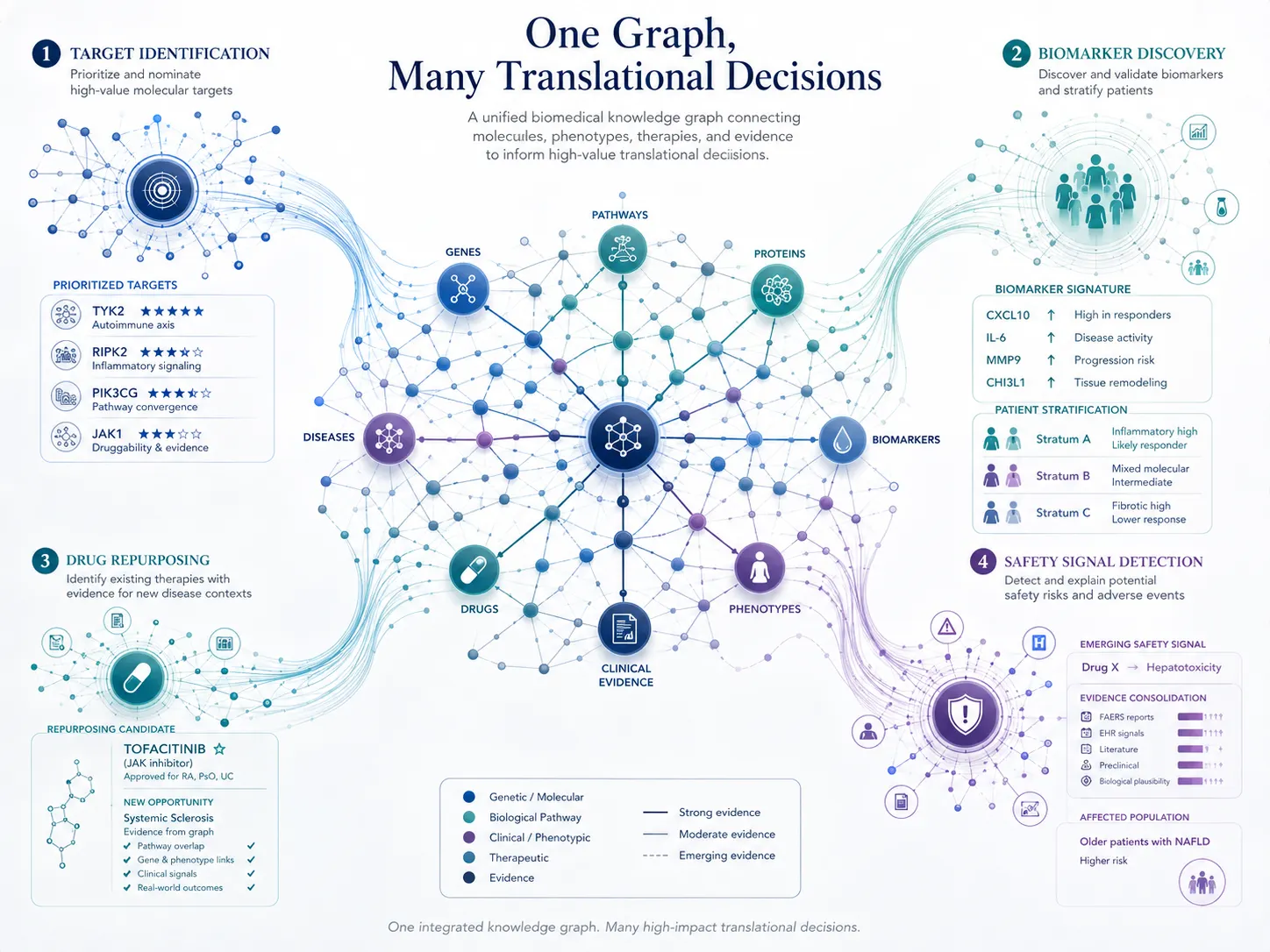
- Target Identification and Validation: By integrating molecular data with clinical evidence, knowledge graphs help prioritize targets with strong mechanistic and therapeutic rationale.
- Biomarker Discovery: Linking phenotypic traits to molecular signatures through graph relationships facilitates the identification of biomarkers predictive of disease progression or treatment response.
- Drug Repurposing and Safety Signal Detection: Network analyses can reveal novel drug–target–disease associations, suggesting repurposing opportunities and highlighting potential adverse effects.
For example, a knowledge graph may connect a gene implicated in a disease pathway with existing drugs targeting related proteins, suggesting candidates for repurposing. Similarly, integrated phenotypic and molecular data can uncover biomarker panels that stratify patient populations more effectively.
Limitations and Barriers to Adoption in Clinical and Translational Settings
Despite their promise, biomedical knowledge graphs face several challenges that limit widespread adoption:
- Data Quality and Completeness: Biomedical data are often incomplete, noisy, or inconsistent, which can reduce the reliability of graph-derived inferences.
- Computational Scalability: Large-scale graphs encompassing multi-omics, clinical, and literature data require substantial computational resources and efficient algorithms to enable real-time querying and analysis.
- Interpretability: Complex graph models and machine learning outputs can be difficult to interpret, posing challenges for clinical decision support where transparency is critical.
- Workflow Integration: Incorporating knowledge graphs into existing translational research and clinical workflows demands interoperability with diverse data systems and user-friendly interfaces.
Addressing these limitations requires ongoing methodological advances, rigorous validation, and collaborative efforts between computational scientists and biomedical researchers.
Medvolt’s Role in Knowledge Graph–Driven Translational Decision Support
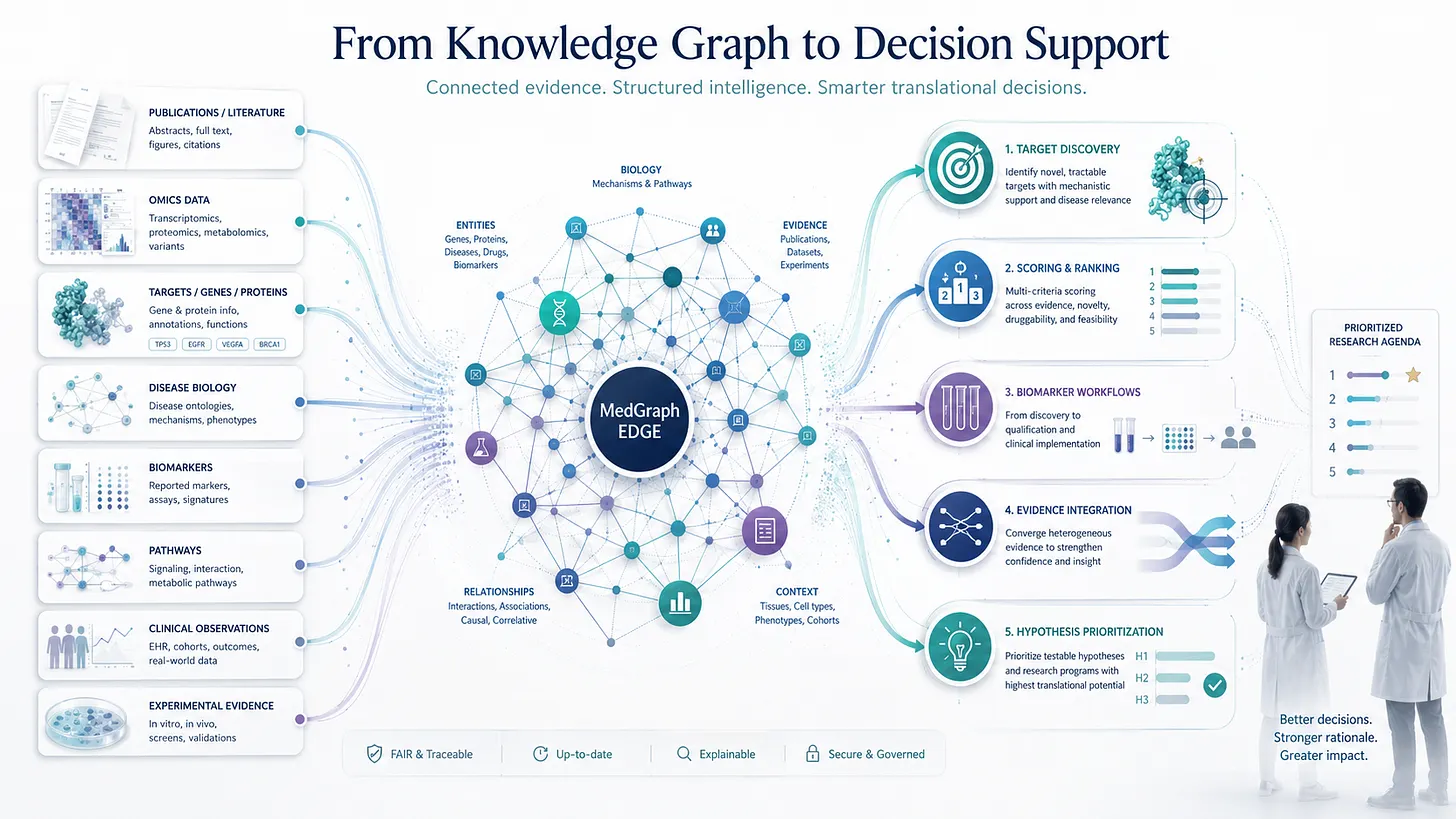
Medvolt engages at critical stages of biomedical knowledge graph utilization to support translational medicine workflows. The MedGraph EDGE platform exemplifies this approach by facilitating:
- Target Discovery and Knowledge Exploration: MedGraph EDGE integrates multi-source biomedical data into structured graphs, enabling researchers to explore complex relationships among genes, diseases, and drugs.
- Scoring and Ranking: The platform applies computational methods to prioritize targets and biomarkers based on integrated evidence, assisting decision-making in target validation and candidate selection.
- Biomarker Identification Workflows: By linking molecular and phenotypic data, MedGraph EDGE supports workflows aimed at discovering clinically relevant biomarkers.
- Comprehensive Data Curation and Semantic Integration: Medvolt emphasizes rigorous data normalization and ontology-driven semantic frameworks to enhance graph quality and interoperability.
While Medvolt’s capabilities provide operational support for knowledge graph construction and interpretation, it is important to note that these tools do not independently establish clinical validity or guarantee therapeutic success. Instead, they offer another layer of structured evidence to inform translational research decisions.
Emerging Trends and Future Directions in Biomedical Knowledge Graphs
The utility of biomedical knowledge graphs is poised to expand through several ongoing developments:
- Enhanced Multi-Omics and Real-World Data Integration: Incorporating diverse data types such as genomics, proteomics, electronic health records, and patient-reported outcomes will enrich graph content and contextual relevance.
- Advancements in Explainable AI: Developing interpretable machine learning models within knowledge graphs will improve transparency and trust in computational inferences.
- Collaborative Data Sharing Frameworks: Establishing standards and platforms for sharing curated biomedical knowledge graphs will facilitate broader adoption and reproducibility.
These trends underscore the evolving landscape of computational tools that can better support the complex decision-making processes inherent in translational medicine.
Conclusion
Biomedical knowledge graphs represent a structured and semantically rich framework to integrate heterogeneous biomedical data spanning molecular to clinical scales. By encoding entities and their multifaceted relationships into graph structures, they enable computational inference methods that can support target identification, biomarker discovery, and drug repurposing efforts within translational medicine.
However, the reliability of knowledge graph–based insights depends critically on data quality, computational scalability, and interpretability. These limitations necessitate cautious application and underscore the importance of complementary experimental validation.
Medvolt’s MedGraph EDGE platform exemplifies an operational approach to constructing, scoring, and leveraging biomedical knowledge graphs to enhance decision intelligence in translational workflows. While not a substitute for biological validation, such tools provide valuable integrative perspectives that can guide prioritization and hypothesis generation.
Ongoing advancements in multi-omics integration, explainable AI, and collaborative frameworks will further enhance the applicability of biomedical knowledge graphs. Continued interdisciplinary collaboration remains essential to realize their full potential in bridging preclinical insights with clinical decision-making.
The integration of structured biomedical knowledge into graph-based representations offers a promising avenue to address the complexity and fragmentation of translational data, ultimately supporting more informed and systematic biomedical research strategies.