


Decoding Kinase Inhibitor Binding Kinetics via Extended Molecular Dynamics for Enhanced Prioritization
Explore how extended molecular dynamics reveals kinase inhibitor binding kinetics, transient states and residence times to improve drug candidate prioritization.
Limitations of Affinity-Based Kinase Inhibitor Screening
Kinase inhibitors have become pivotal in targeted therapies across oncology and other disease areas. Traditionally, the prioritization of kinase inhibitors relies heavily on binding affinity measurements, such as IC50 or Kd values, derived from biochemical or biophysical assays. While these metrics quantify the strength of interaction at equilibrium, they provide a limited view of the dynamic binding process.
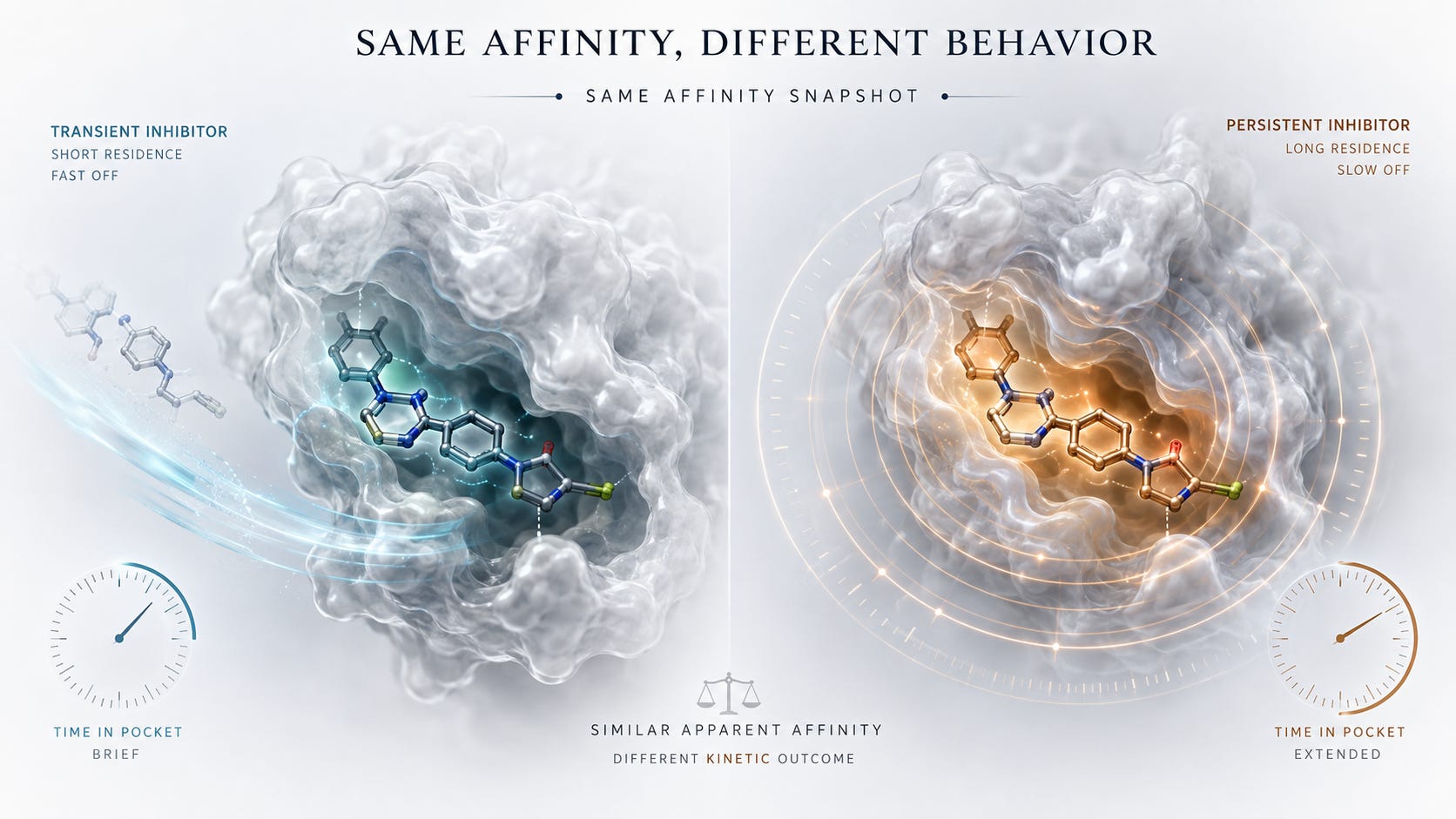
Binding affinity alone does not capture kinetic parameters such as association (k_on) and dissociation (k_off) rates, which govern how quickly an inhibitor engages or disengages from its kinase target. These kinetic factors influence the residence time—the duration an inhibitor remains bound to the kinase—which can critically affect pharmacological efficacy and selectivity in vivo.
Moreover, static structural snapshots, often obtained through X-ray crystallography or docking studies, represent only a single or limited set of conformations. They fail to reveal transient or intermediate states that may be crucial for understanding the full binding mechanism. Neglecting these kinetic and dynamic aspects can lead to suboptimal candidate selection and late-stage failures due to inadequate target engagement or off-target effects.
Fundamentals of Kinase-Inhibitor Binding Kinetics
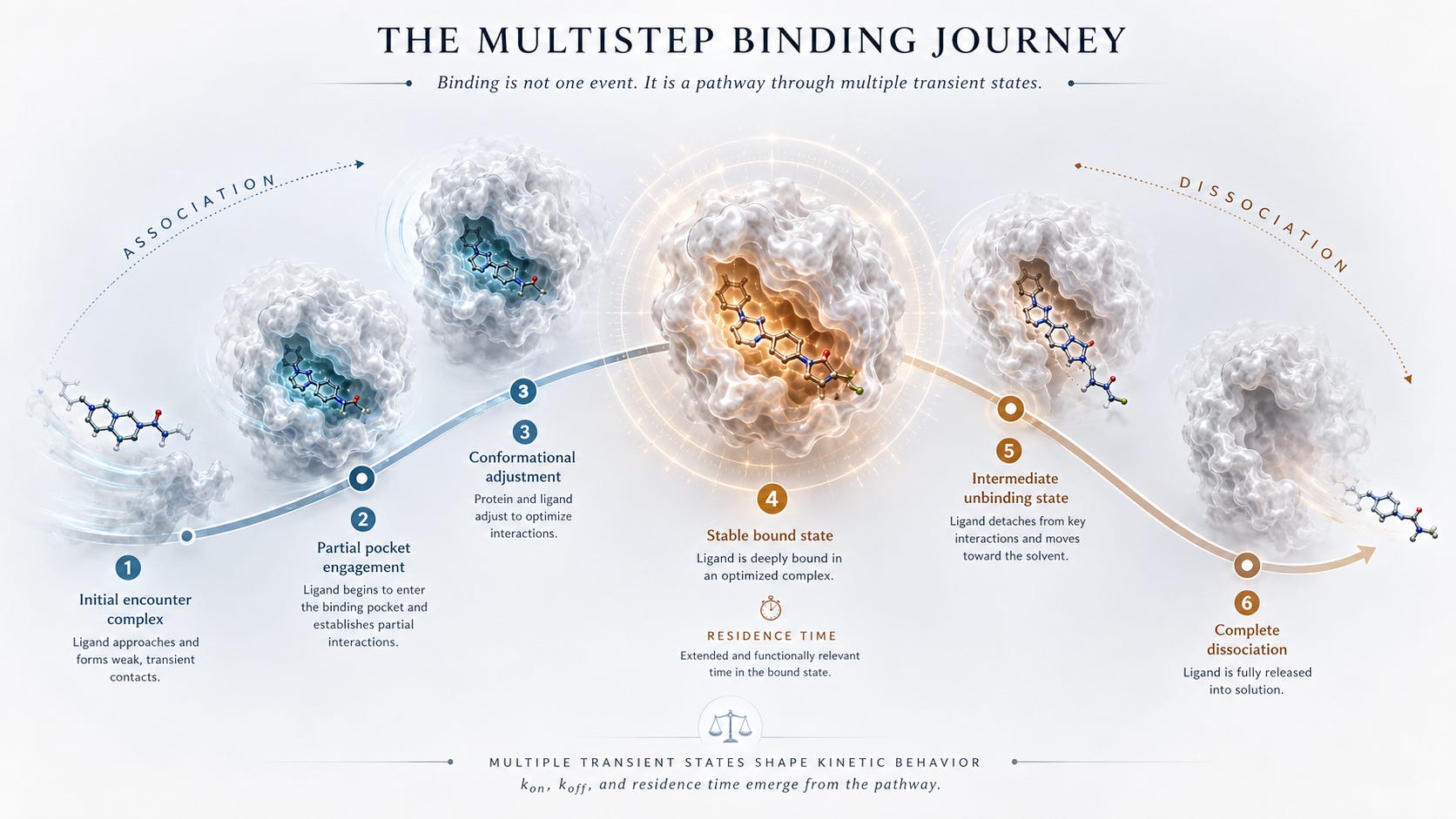
The binding of inhibitors to kinases is a complex, multistep process involving a series of transient intermediates and conformational changes in both the protein and ligand. Kinases exhibit intrinsic conformational flexibility, with active and inactive states, as well as local rearrangements in the ATP-binding pocket and adjacent regions.
Inhibitor association typically proceeds through initial encounter complexes, followed by conformational adjustments that stabilize the bound state. Dissociation may occur via multiple pathways, traversing distinct intermediate states before complete unbinding. These kinetic pathways are influenced by molecular features such as hydrogen bonding networks, hydrophobic contacts, and steric complementarity.
Residence time, determined largely by the dissociation rate, has been correlated with improved pharmacological outcomes, including sustained target inhibition and reduced dosing frequency. Selectivity can also be modulated by kinetic factors, as differences in binding and unbinding rates across kinase isoforms affect off-target interactions.
Extended Molecular Dynamics Simulations for Kinetic Profiling
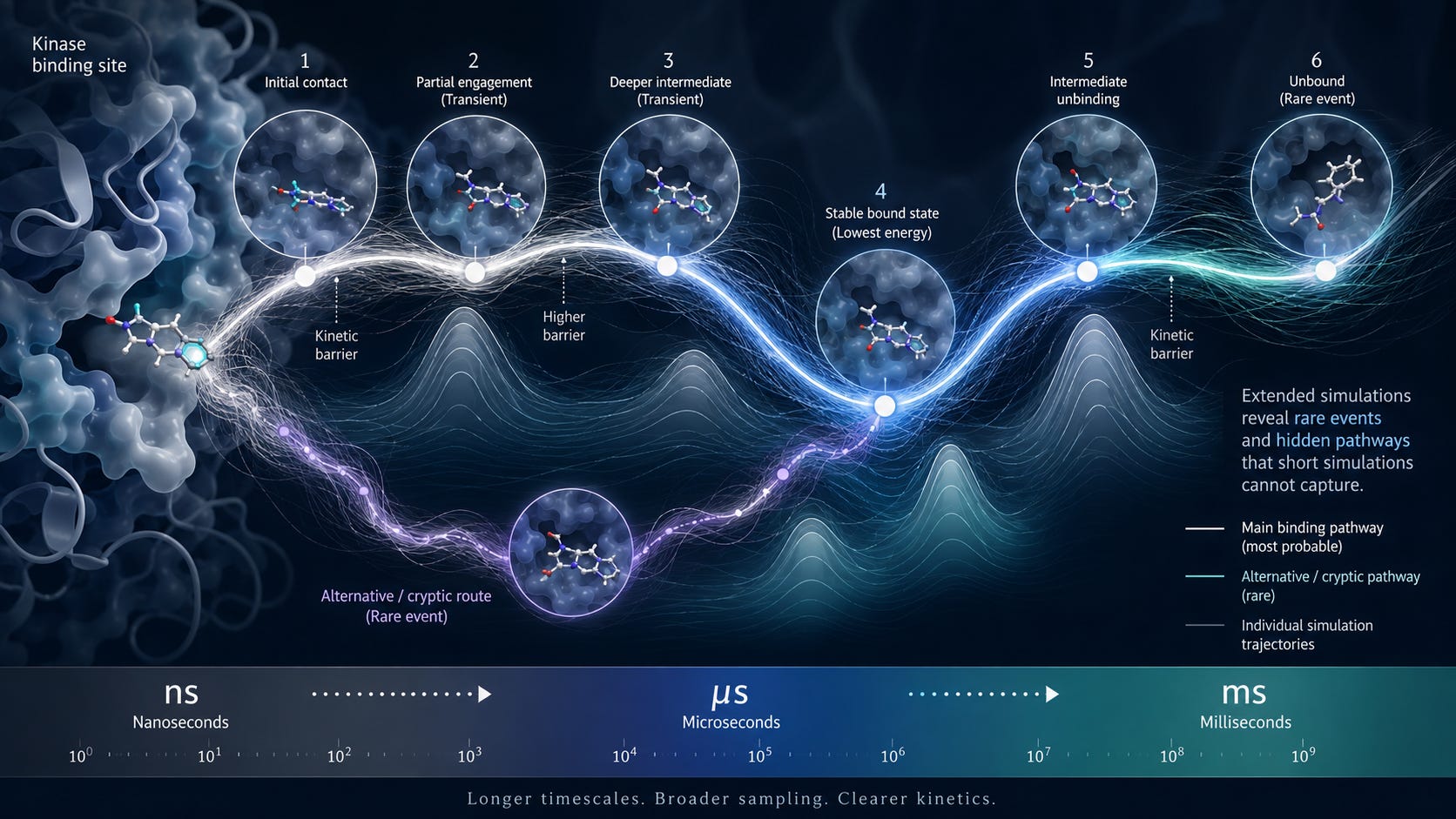
Extended molecular dynamics (MD) simulations provide a powerful computational approach to capture the temporal evolution of kinase-inhibitor complexes at atomic resolution. By simulating trajectories over microsecond to millisecond timescales, these simulations can observe rare events such as binding and unbinding transitions, which are inaccessible to shorter simulations or static methods.
Through extended MD, intermediate conformations and kinetic barriers along association and dissociation pathways become observable. This enables the characterization of transient binding modes, cryptic pockets, and conformational rearrangements that modulate kinetics.
Enhanced sampling techniques, including metadynamics, replica exchange, or accelerated MD, can further improve the detection of kinetic intermediates by overcoming energy barriers and expanding conformational sampling. These methods allow a more comprehensive mapping of the free-energy landscape governing kinase-inhibitor interactions.
Scientific Case Studies Using Extended MD to Elucidate Kinase-Inhibitor Kinetics
Several peer-reviewed studies have demonstrated the utility of extended MD in revealing kinetic mechanisms relevant to kinase inhibitor prioritization. For example, simulations have uncovered cryptic binding pockets that transiently open during protein fluctuations, providing alternative binding routes or stabilizing interactions that affect residence time.
Extended MD trajectories have also revealed multiple binding and unbinding pathways, highlighting the heterogeneity of kinetic processes. These findings underscore that a single static binding pose may not represent the full kinetic profile.
Importantly, correlations have been observed between kinetic intermediates identified in simulations and experimentally measured residence times, supporting the mechanistic relevance of these computational insights. Such studies illustrate how kinetic profiling can complement affinity data to refine inhibitor ranking.
Challenges and Limitations of Extended MD in Kinetic Analysis
Despite its advantages, extended MD simulation faces significant challenges. The high computational cost restricts the achievable simulation length and throughput, limiting routine application across large compound libraries.
Force field approximations and solvent models introduce uncertainties in the accuracy of predicted interactions and energy barriers. These factors can affect the reliability of kinetic pathway identification and rate estimation.
Quantitative prediction of kinetic rates from MD remains difficult due to the need for extensive sampling and the complexity of extracting rate constants from stochastic trajectories. Validation against experimental kinetic data is essential to establish confidence in computational findings.
Incorporating Kinetic Insights into Kinase Inhibitor Prioritization
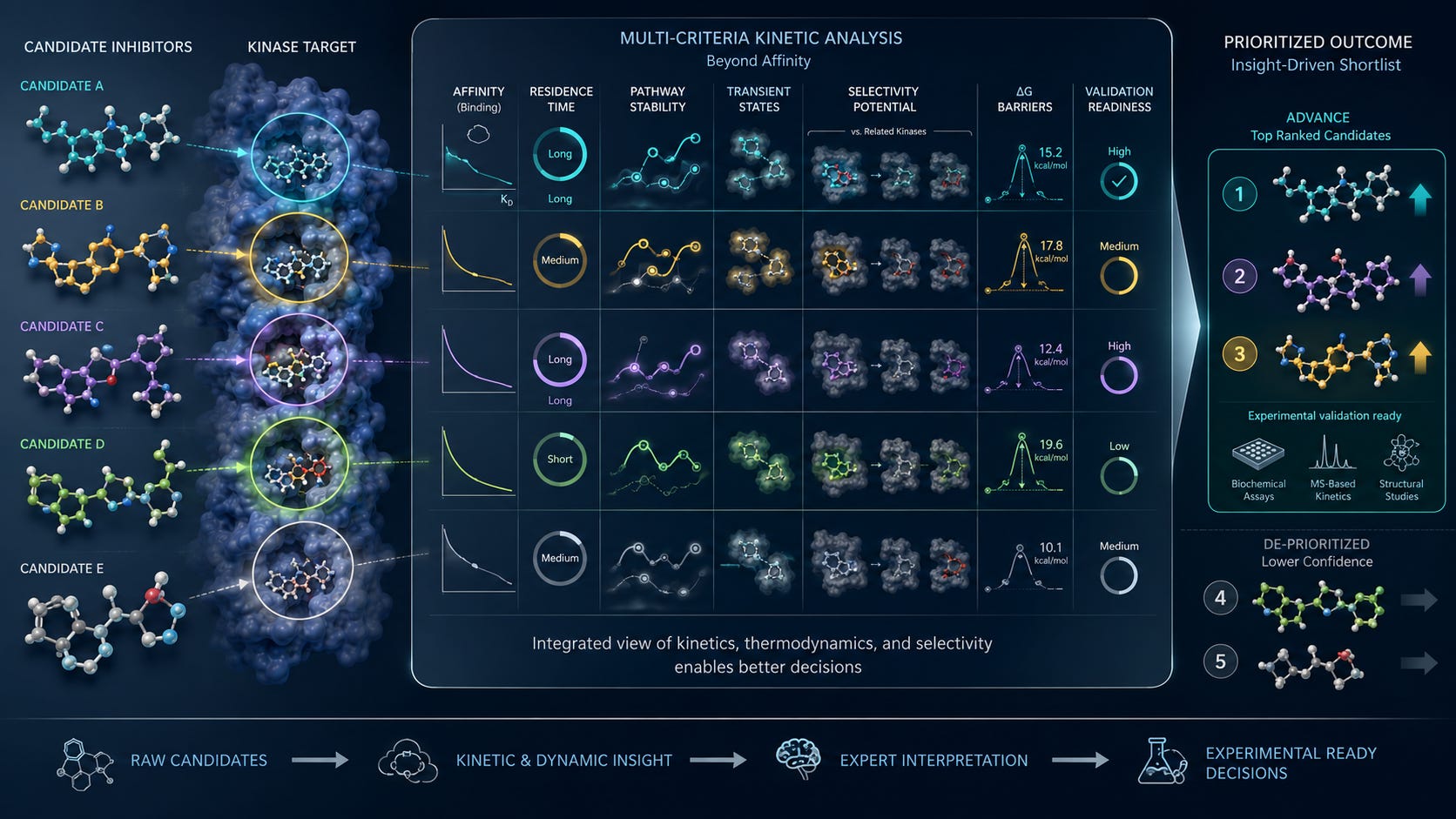
Integrating kinetic binding profiles into inhibitor prioritization workflows offers a more nuanced assessment than affinity alone. Kinetic data provide direct information on residence time and selectivity potential, which are critical for therapeutic efficacy.
By combining affinity and kinetic parameters, medicinal chemists can better discriminate candidates with favorable dynamic binding properties. Early kinetic assessment may identify compounds with prolonged target engagement or reduced off-target binding, guiding synthesis and testing priorities.
This integrated approach can improve resource allocation during early drug discovery, focusing efforts on molecules with mechanistically supported profiles likely to translate into clinical benefit.
Medvolt’s Computational Capabilities for Kinetic Binding Analysis
Medvolt offers advanced molecular dynamics and physics-based simulation workflows tailored to analyze kinetic binding mechanisms and transient states in kinase-inhibitor complexes. Its Oopal-cMD module supports extended MD simulations capable of capturing atomistic behavior, conformational flexibility, and solvent dynamics over relevant timescales.
Complementary physics-based analyses quantify binding energetics and dynamic interaction patterns, facilitating interpretation of kinetic intermediates and barriers. AI-assisted binding site identification enhances detection of cryptic pockets and alternative binding modes that influence kinetics.
These integrated capabilities enable the incorporation of kinetic insights into kinase inhibitor prioritization workflows, providing medicinal chemists with a richer mechanistic context for candidate selection. Medvolt’s approach emphasizes human-in-the-loop interpretation, ensuring computational outputs guide experimental validation rather than replace it.
Emerging Approaches in Kinetic Modeling of Kinase Inhibitors
Recent advances are expanding the computational toolkit for kinetic analysis. Machine learning methods are being integrated with MD simulations to predict kinetic parameters and identify relevant conformational states more efficiently.
Development of improved force fields and enhanced sampling algorithms continues to increase the accuracy and scope of kinetic pathway exploration.
Combining simulation data with experimental kinetic measurements, such as surface plasmon resonance or stopped-flow assays, provides a feedback loop for model refinement and validation, strengthening the translational relevance of computational predictions.
Conclusion:
Extended molecular dynamics simulations offer a valuable window into the dynamic processes underlying kinase-inhibitor binding kinetics. By revealing transient conformational states and kinetic intermediates, these simulations provide mechanistic insights that complement traditional affinity-based assessments.
While computational challenges remain, including high resource demands and limitations in quantitative rate prediction, the integration of kinetic data into inhibitor prioritization can enhance the selection of candidates with favorable residence times and selectivity profiles.
Medvolt’s computational workflows, combining extended MD, physics-based analyses, and AI-driven binding site identification, support the operational incorporation of kinetic insights into kinase drug discovery. This approach provides medicinal chemists with a deeper understanding of binding mechanisms, informing more informed prioritization decisions and experimental planning.
As the field progresses, continued methodological improvements and validation efforts will further clarify the role of kinetic binding profiles in optimizing kinase inhibitor development.
Researchers and practitioners are encouraged to explore the integration of extended molecular dynamics simulations into their prioritization workflows and to engage with the computational challenges inherent in capturing binding kinetics.

