


Expanding Therapeutic Horizons: AI-Enabled Multi-Omics Discovery of Synthetic Lethal Targets in DNA Repair-Deficient Tumors
Explore how AI-driven multi-omics integration identifies synthetic lethal targets in DNA repair-deficient cancers, advancing precision oncology and drug discovery.
Molecular Basis and Clinical Impact of DNA Repair Deficiencies in Cancer
DNA repair pathways are fundamental to maintaining genomic integrity by correcting DNA damage incurred from endogenous processes and environmental insults. In many cancers, key DNA repair mechanisms such as homologous recombination (HR) and mismatch repair (MMR) are frequently mutated or functionally compromised. For example, mutations in BRCA1 and BRCA2 disrupt HR, while defects in MMR genes like MLH1 and MSH2 lead to microsatellite instability.
These deficiencies contribute to tumor progression by increasing genomic instability, which can accelerate oncogenic transformation. However, they also confer vulnerabilities that can be therapeutically exploited. Clinically, DNA repair-deficient tumors often exhibit resistance to conventional chemotherapies and radiotherapy due to altered DNA damage response pathways.
Current therapeutic strategies have leveraged these defects, most notably through poly(ADP-ribose) polymerase (PARP) inhibitors that target HR-deficient tumors. While PARP inhibitors have demonstrated efficacy in subsets of patients, their utility is limited by resistance mechanisms and a narrow scope of actionable targets. This underscores the need to identify additional vulnerabilities within DNA repair-deficient cancers.
Principles and Therapeutic Potential of Synthetic Lethality
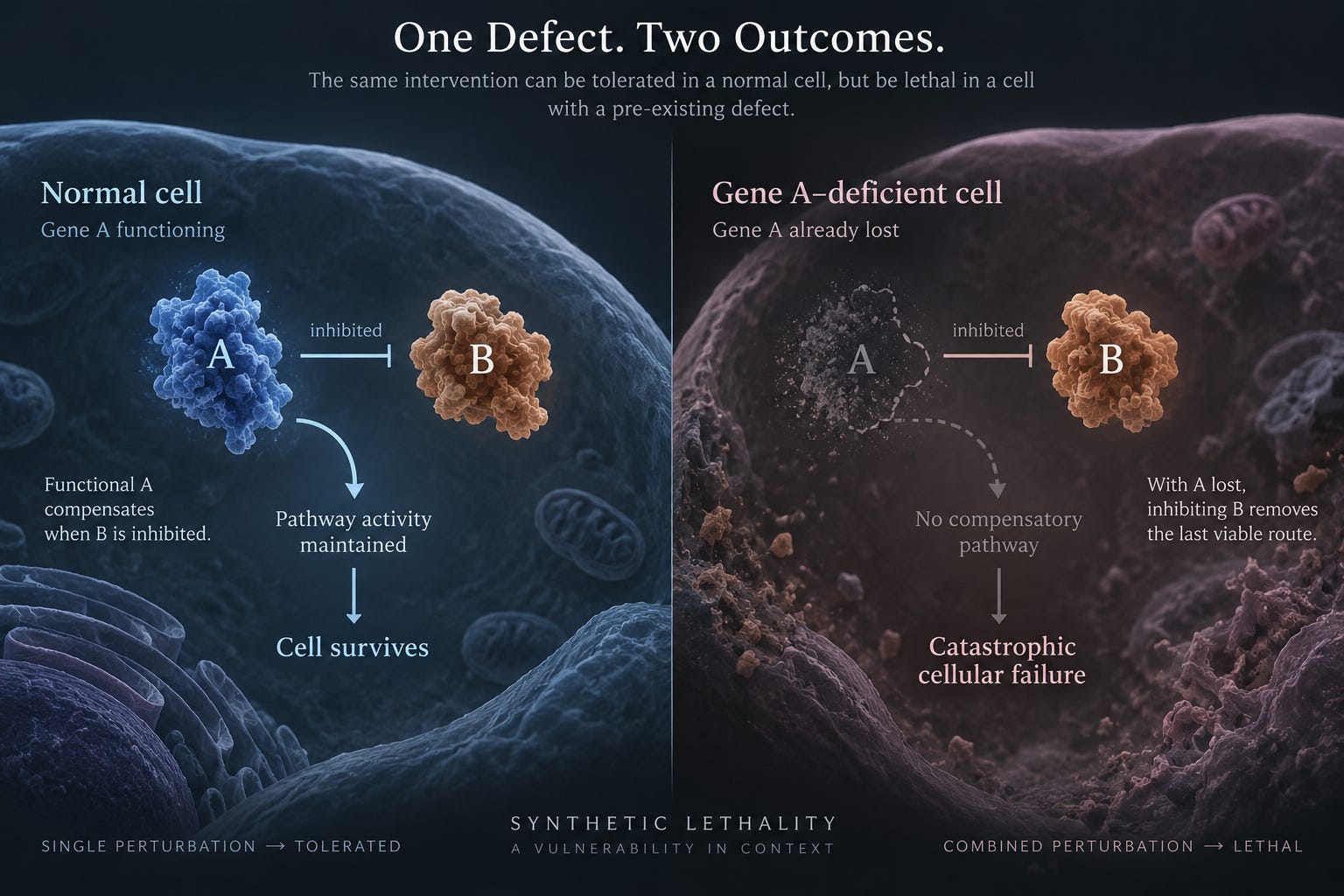
Synthetic lethality arises when the simultaneous perturbation of two genes leads to cell death, whereas disruption of either gene alone is tolerated. This concept is particularly relevant in oncology, where tumor-specific genetic defects can be exploited by targeting complementary pathways, sparing normal cells.
Classic examples include the synthetic lethal interaction between BRCA mutations and PARP inhibition. Here, loss of HR repair sensitizes cells to PARP inhibitors, which block single-strand break repair, culminating in lethal DNA damage accumulation.
Mechanistically, synthetic lethality induces selective tumor cell death by exploiting compensatory dependencies that arise from genetic defects. However, translating synthetic lethality into effective therapies faces challenges such as identifying robust gene pairs, accounting for tumor heterogeneity and overcoming compensatory mechanisms that may bypass synthetic lethal interactions.
Shortcomings of Traditional Synthetic Lethality Discovery Methods
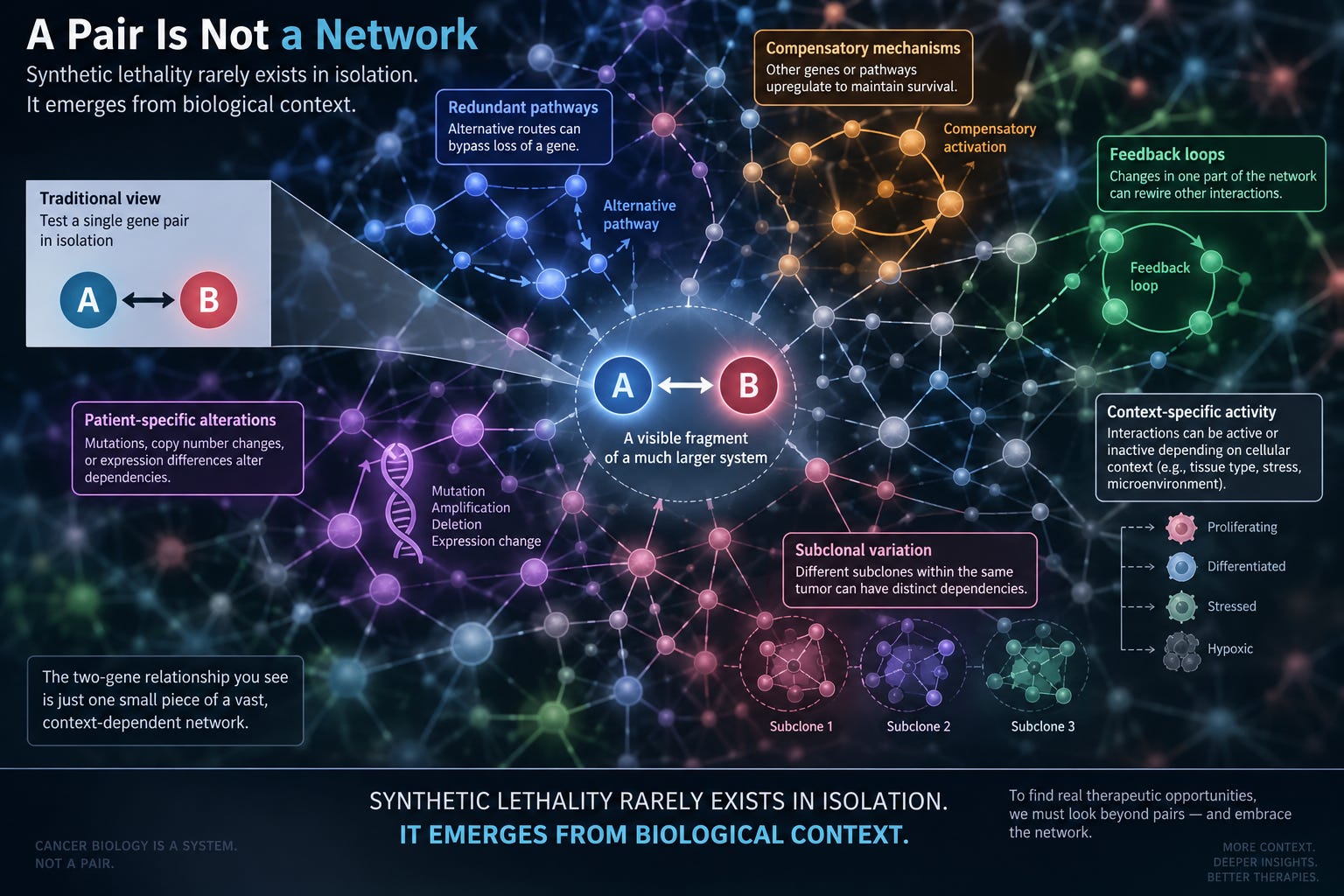
Traditional approaches to discovering synthetic lethal targets have largely focused on identifying single gene pairs through genetic screens or candidate gene studies. This reductionist view oversimplifies the intricate network of genetic and pathway interactions within cancer cells.
Such methods often overlook pathway redundancy and compensation, where alternative routes can mitigate the loss of a single gene, thus confounding synthetic lethality predictions. Moreover, tumor heterogeneity introduces variability in genetic dependencies across patients and even within tumor subclones.
Consequently, there is a growing recognition that systems-level approaches are necessary to capture the multifactorial dependencies that underpin synthetic lethality, moving beyond isolated gene pairs to complex interaction networks.
Integrating Multi-Omics Data to Map Synthetic Lethal Networks
Multi-omics integration combines diverse biological data layers—including genomic mutations, transcriptomic expression profiles and proteomic pathway activities—to provide a comprehensive view of tumor biology. Each omics layer contributes unique insights: genomics reveals mutational landscapes; transcriptomics captures gene expression dynamics; proteomics reflects functional protein states and pathway activation.
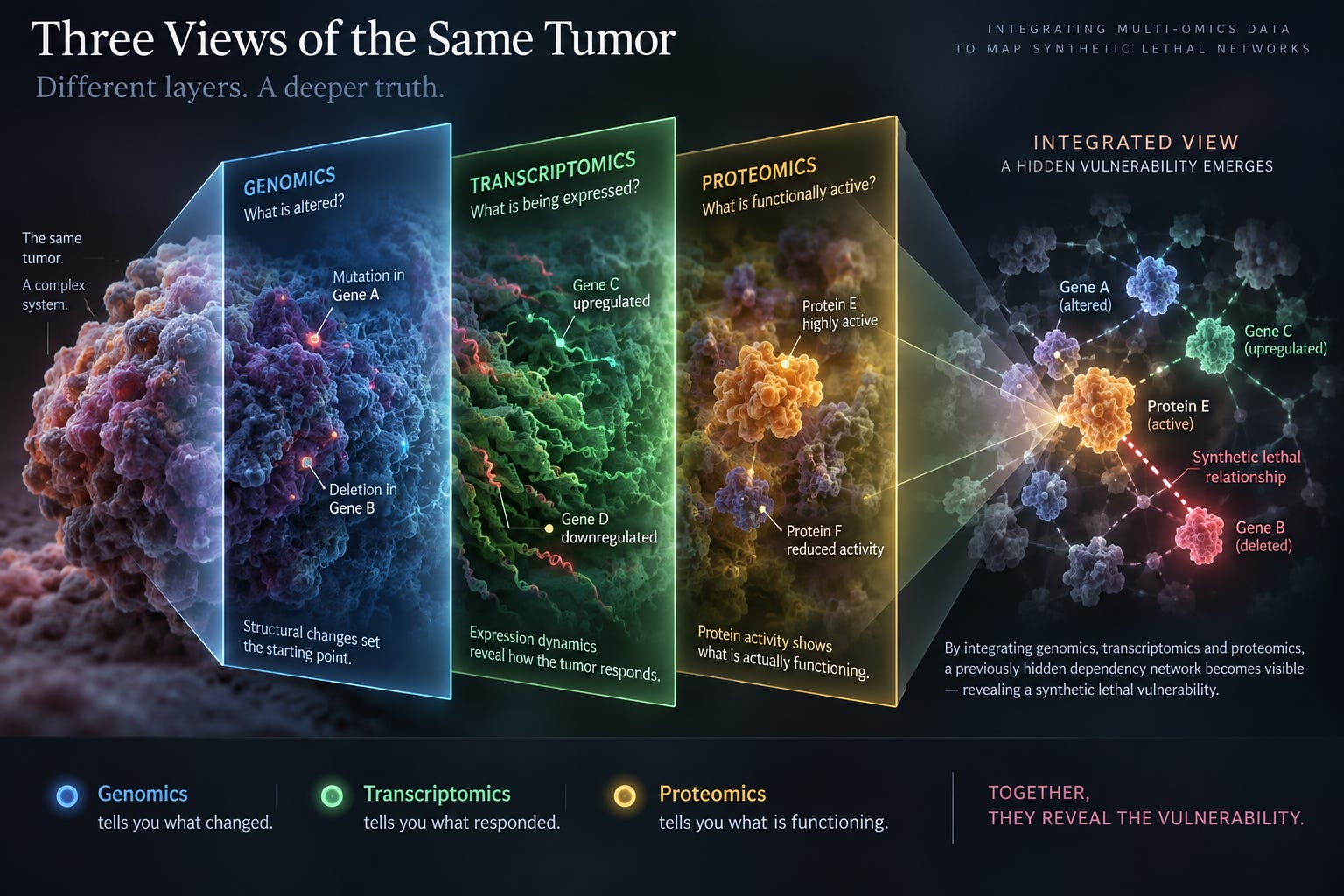
By integrating these datasets, researchers can uncover crosstalk between pathways and identify synthetic lethal interactions that emerge from network-level dependencies rather than single gene pairs. For instance, a mutation in a DNA repair gene may induce compensatory upregulation of alternative repair pathways detectable at the transcriptomic and proteomic levels.
Case studies have demonstrated that multi-omics integration can reveal novel synthetic lethal relationships, such as dependencies on specific cell cycle regulators or metabolic enzymes in DNA repair-deficient contexts, which would be missed by single-omics analyses.
AI-Driven Computational Strategies for Predicting Synthetic Lethal Interactions
Artificial intelligence (AI) methods, including machine learning and knowledge graph-based approaches, have been applied to model complex gene dependencies from integrated multi-omics data. These computational strategies infer synthetic lethal interactions by identifying patterns of co-dependencies, pathway compensations and network perturbations.
Network and pathway analysis tools prioritize candidate synthetic lethal targets by evaluating their centrality, connectivity and functional relevance within biological networks. AI models can incorporate heterogeneous data sources, including mutation status, expression levels and protein interactions, to generate ranked hypotheses.
However, challenges remain regarding data quality, harmonization across omics platforms and model interpretability. Biological validation is essential to confirm computational predictions, as AI models may capture correlations without establishing causality.
Experimental and Clinical Validation of AI-Predicted Synthetic Lethal Targets
Preclinical validation typically involves genetic perturbation experiments, such as CRISPR-based knockouts or RNA interference, in cell lines or patient-derived models harboring DNA repair deficiencies. These studies assess whether targeting AI-predicted synthetic lethal genes induces selective tumor cell death.
Several clinical trials have explored therapies guided by synthetic lethality principles, often focusing on DNA repair-deficient tumors. While some AI-predicted targets have progressed to early-stage evaluation, comprehensive validation remains a bottleneck due to the complexity of tumor biology and compensatory mechanisms.
Current validation strategies face limitations including model representativeness, off-target effects and the dynamic nature of tumor evolution. Robust experimental designs integrating multi-omics profiling and functional assays are needed to substantiate AI-derived hypotheses.
Translational Considerations in Developing Synthetic Lethal Therapies
Translating synthetic lethal targets into therapies requires assessing target druggability and tractability. Not all synthetic lethal genes encode proteins amenable to pharmacological modulation, necessitating prioritization based on structural and functional criteria.
Tumor heterogeneity and adaptive resistance mechanisms can undermine therapeutic efficacy by enabling escape from synthetic lethal dependencies. Understanding these factors is critical for designing combination therapies and patient stratification strategies.
Computational prioritization plays a pivotal role in guiding experimental validation and development by integrating biological relevance, druggability and resistance risk to focus resources on the most promising candidates.
Medvolt’s Computational Support for AI-Enabled Multi-Omics Synthetic Lethality Discovery
Medvolt contributes to this emerging field by facilitating the integration of multi-omics datasets with AI-driven pathway and knowledge graph analyses. This approach enables the identification and prioritization of synthetic lethal targets within complex biological networks.
Following candidate identification, Medvolt applies molecular docking and dynamics simulations to assess target interaction sites and ligand binding feasibility, providing a physics-based layer of validation. Free-energy calculations further refine the energetic landscape of potential interactions, supporting informed prioritization.
Medvolt’s integrated platform supports experimental design by linking computational predictions with biomedical knowledge systems, helping translational researchers plan validation studies and optimize resource allocation. This workflow exemplifies a science-first discovery process combining AI insights with mechanistic evaluation.
It is important to note that Medvolt’s computational capabilities complement but do not replace necessary experimental validation. Predictions serve as hypotheses to guide focused laboratory investigation rather than definitive proof of therapeutic potential.
Future Perspectives on Synthetic Lethality and Oncology Drug Discovery
The scope of synthetic lethality targeting is expanding beyond DNA repair deficiencies to encompass other tumor vulnerabilities, such as metabolic dependencies and epigenetic regulators. Incorporating dynamic and longitudinal multi-omics data promises to refine AI models by capturing temporal changes and tumor evolution.
Personalized synthetic lethality-based therapies guided by comprehensive profiling may enhance patient stratification and therapeutic precision. However, challenges in data integration, model generalizability and clinical translation persist.
Continued development of computational workflows that combine multi-omics integration with physics-based molecular simulations will be essential to deepen mechanistic insight and support robust target prioritization. Collaborative efforts bridging computational biology, experimental validation and clinical research will drive progress in this promising therapeutic avenue.

