From Mendeleev’s Periodic Table to AI-Driven Molecular Design: Advancing the Boundaries of Discovery
From Mendeleev’s predictive periodic table to AI-driven molecular design, discovery is evolving into a data-driven, predictive science.
Introduction
In 1869, Dmitri Mendeleev famously organized the chemical elements into the now-iconic periodic table. His visionary approach was not limited to categorizing known elements; it embraced predictive power, leaving spaces for elements yet to be discovered. This act of bridging the known and unknown entirely reshaped chemistry, transforming it from a descriptive discipline into a systematic science with predictive capabilities. Today, this ethos of prediction and structure has transcended traditional chemistry, finding new life in AI-driven drug discovery and molecular design. Companies operating at the cutting edge of biotechnology and computational chemistry are pushing beyond Mendeleev’s conceptual vision, leveraging artificial intelligence (AI) to unravel the complexities of biology, chemistry, and medicine.
Mendeleev’s Insights: A Catalyst for Predictive Science
Mendeleev’s methodology of organizing elements based on their atomic weights and recurring properties was revolutionary. His periodic law provided clarity and order to a field that was previously disparate and fragmented. Crucially, Mendeleev left deliberate gaps in his table, hypothesizing the existence and properties of yet-undiscovered elements such as gallium and germanium. These predictions, which were later confirmed, catalyzed a paradigm shift, proving that disciplined anticipation could guide experimental discovery.
In hindsight, Mendeleev’s periodic table was more than a triumph of classification. It illustrated how understanding systemic patterns in data could generate meaningful insights beyond immediate observation—a principle that underpins much of what computational chemistry and AI seek to achieve today.
The Intersection of AI and Molecular Science
Where Mendeleev shuffled physical cards in search of order, modern researchers analyze vast datasets of molecules, reactions, and biological interactions with computational precision. AI-driven tools now harness the power of machine learning (ML), quantum mechanics, and large-scale molecular simulations to reveal patterns and possibilities that would otherwise elude human intuition.
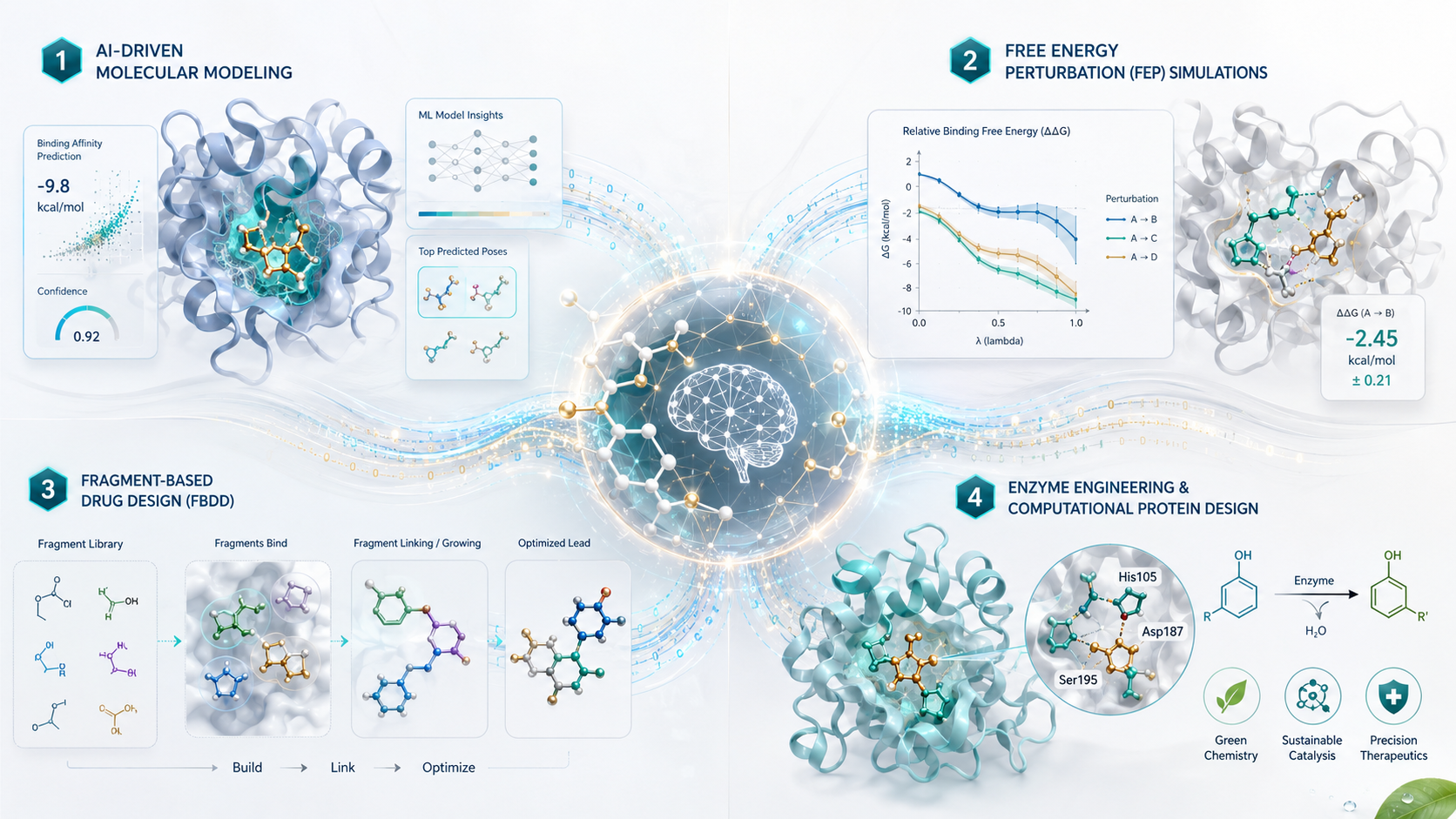
At the heart of these efforts are platforms that integrate methodologies such as:
1. AI-Driven Molecular Modeling
AI models trained on multi-omics datasets, structural biology insights, and high-throughput screening results can predict how molecules bind to biological targets. This accelerates the identification of lead candidates for drug development, saving significant time and cost compared to traditional trial-and-error approaches.
2. Free Energy Perturbation (FEP) Simulations
FEP calculations allow the precise estimation of binding free energies between drug candidates and targets in silico. These simulations are particularly influential in fine-tuning lead compounds for potency, selectivity, and safety, echoing Mendeleev’s spirit of inferring useful properties from systematic data.
3. Fragment-Based Drug Design (FBDD)
FBDD breaks large challenges into manageable pieces, using small fragments of molecules to create optimized compounds. This approach mirrors Mendeleev’s compartmentalization of chemical data into logical parts to uncover unifying patterns.
4. Enzyme Engineering and Computational Protein Design
Catalyzation and metabolic intervention form the backbone of pharmaceutical synthesis and biomanufacturing. AI-driven enzyme engineering identifies novel reactive centers and enhances biocatalysts, allowing for green chemistry and precision therapeutics—innovations that align with contemporary sustainability goals.
Predictive Power: Anticipating Opportunities Hidden in Complex Systems
One of the reasons Mendeleev’s periodic table endures as a cornerstone of science is its predictive accuracy. This theme of prediction—bridging the known and unknown—is one of the hallmarks of emerging AI technologies in drug design and materials science.
Modern computational methods, for instance, predict de novo designs for drug molecules with both specificity and off-target safety in mind. Algorithms trained on vast datasets of chemical structures identify lead candidates within days, a task that would have taken years in conventional workflows.
Moreover, AI doesn’t just find patterns; it proposes hypotheses. In multi-objective optimization for drug discovery, ML models suggest designs that maximize efficacy while minimizing toxicity. Similarly, in synthetic biology, AI predicts metabolic pathways for engineering microbes, enabling more efficient production of therapeutics and renewable materials.
Much like Mendeleev’s insistence on leaving vacant spaces for unseen elements, today’s researchers leave room for AI-driven hypotheses, working collaboratively to test, validate, and refine predictions in the lab.
Beyond Discovery: Real-World Implications and Workflow Integration
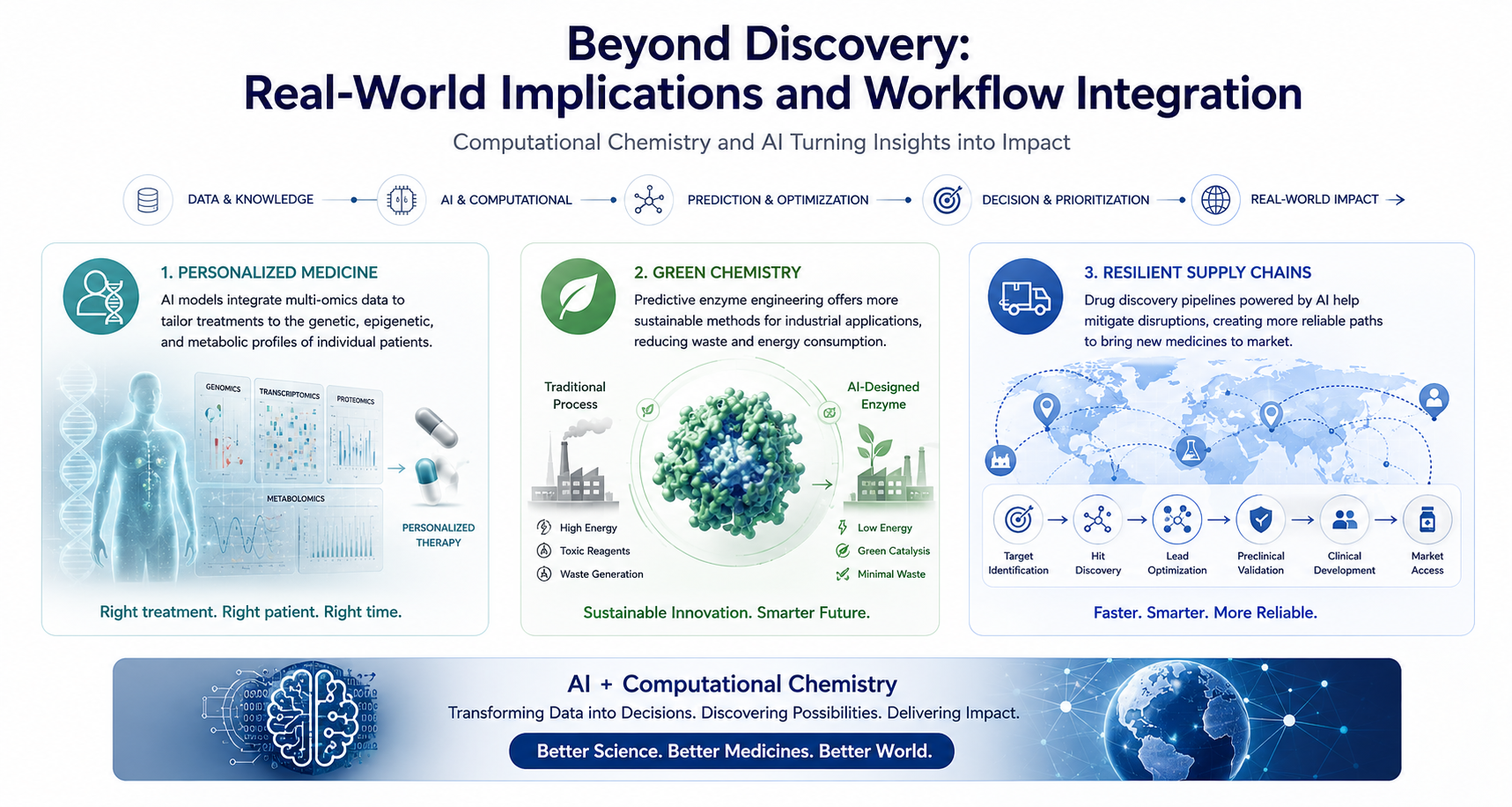
In a world where R&D costs in the pharmaceutical and biotechnology sectors continue to rise, computational methodologies serve as game-changers. They not only reduce discovery timelines but also open the door to solutions for diseases and conditions previously deemed intractable. AI and computational chemistry tools are significantly impacting multiple domains:
- Personalized Medicine: AI models integrate multi-omics data to tailor treatments to the genetic, epigenetic, and metabolic profiles of individual patients.
- Green Chemistry: Predictive enzyme engineering offers more sustainable methods for industrial applications, reducing waste and energy consumption.
- Resilient Supply Chains: Drug discovery pipelines powered by AI help mitigate disruptions, creating more reliable paths to bring new medicines to market.
The Next Frontier: AI and Post-Periodic Science
As we step into the future of molecular science, the periodic table’s structure continues to inspire researchers to think systematically about unseen dimensions. Advances in quantum chemistry are probing beyond the traditional periodic boundaries, investigating superheavy elements and isotopic variations that challenge and reshape atomic theory.
Similarly, AI and machine learning are identifying latent patterns within multi-dimensional datasets that even the periodic table cannot capture. Hypotheses generated by AI—whether about exotic chemical structures or novel metabolic pathways—are now being tested in silico and validated in labs with unprecedented speed.
Medvolt’s Role in the Era of AI-Assisted Discovery
Companies like Medvolt are bridging the gap between visionary academic insights and real-world applications. By integrating AI, computational chemistry, and life sciences expertise into tailored solutions, platforms like Medvolt are advancing the boundaries of possibility in precision medicine, enzyme engineering, and drug design.
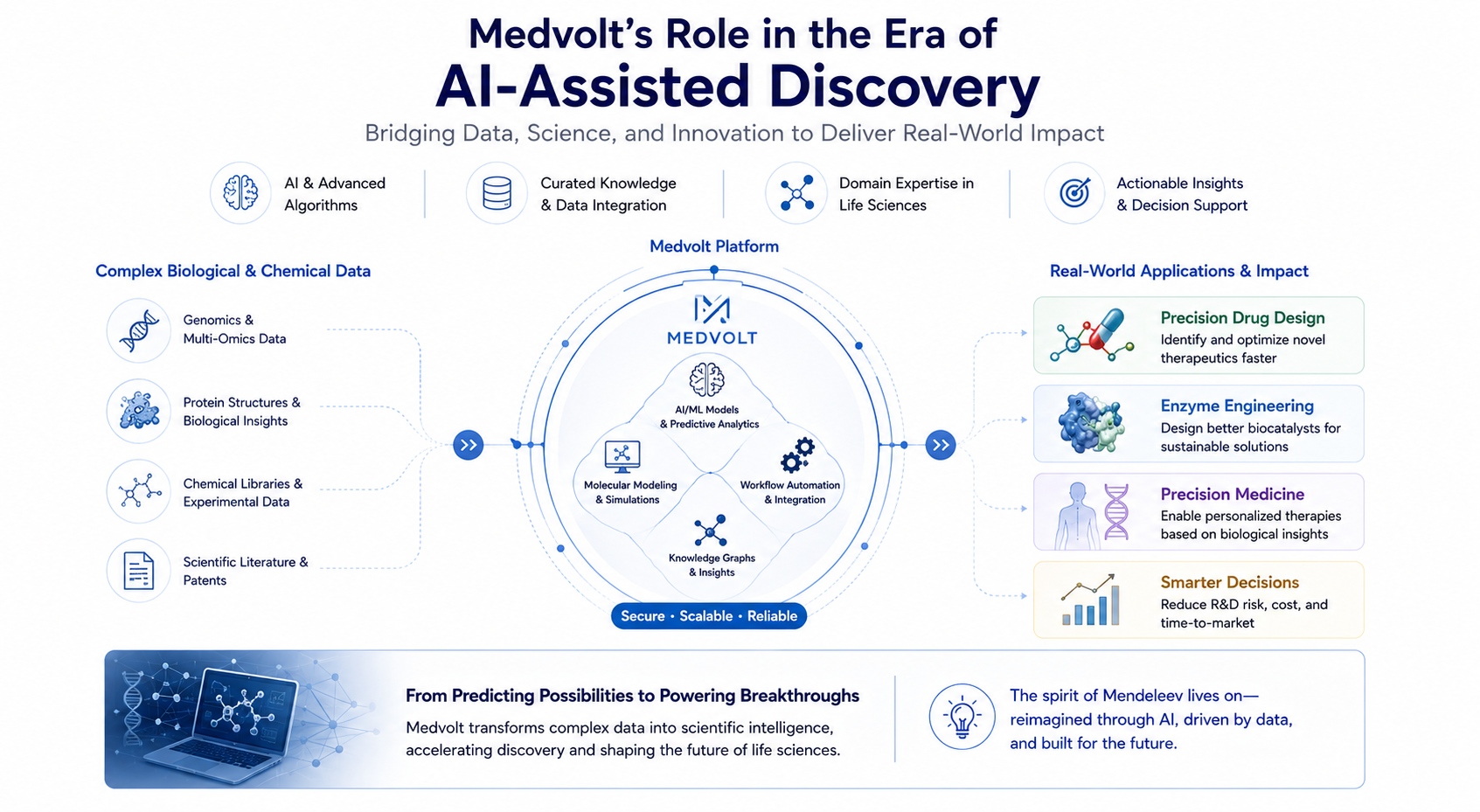
Medvolt leverages robust algorithms and knowledge curation to drive actionable insights from data, solving complex problems in therapeutic R&D. The spirit of innovation and predictive problem-solving that began with Mendeleev’s periodic table finds modern expression in technologies that redefine what’s achievable in the life sciences industry.
Conclusion
Dmitri Mendeleev’s periodic table was a product of inspiration, rigor, and an unwavering belief in the structure of the unknown. Its legacy underscores the power of systematic knowledge and the transformative impact of frameworks that are both descriptive and predictive. Today, AI-driven biotechnology channels this legacy, offering unprecedented tools to uncover molecular connections, predict unknowns, and ultimately create solutions that improve lives.
As we build on the foundations laid over 150 years ago, the confluence of human ingenuity, computational power, and molecular science offers an entirely new paradigm for discovery. This is the age of AI, where innovations in the life sciences bring us closer to realizing the full potential of predictive, data-driven inquiry.