


Ginkgo Datapoints, Tangible Scientific and Inductive Bio Launch ADME-One: A Streamlined ADME Service Enhancing Early Drug Discovery
Explore how ADME-One combines early ADME profiling, AI-driven pharmacokinetic predictions and integrated lab workflows to improve drug discovery decisions.
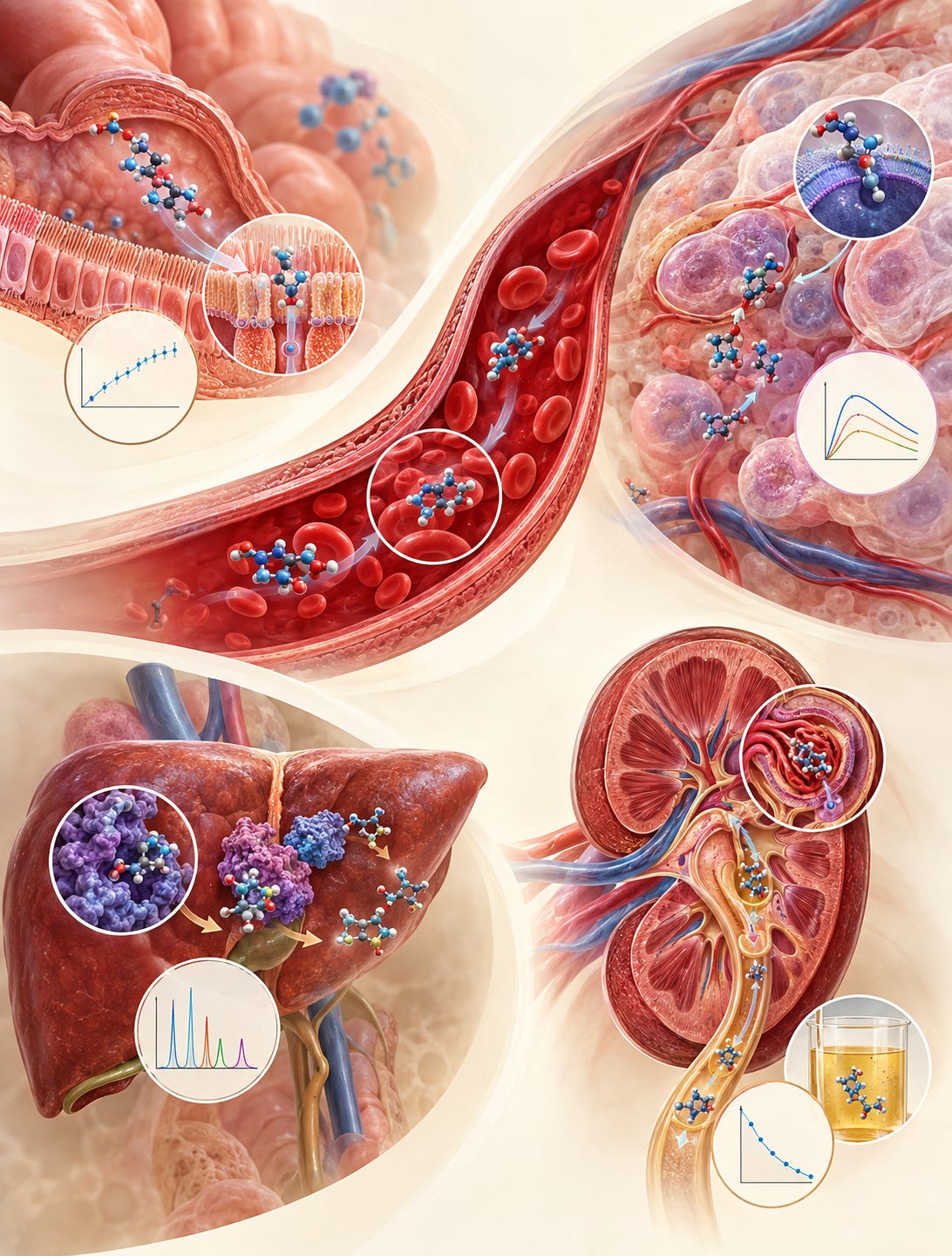
Absorption, Distribution, Metabolism and Excretion (ADME) properties are critical determinants of a drug candidate’s success, influencing efficacy, safety and pharmacokinetics. Traditionally, comprehensive ADME profiling is reserved for later-stage lead optimization, often leaving early discovery teams operating without reliable data on key metabolic liabilities. Recognizing this gap, Ginkgo Datapoints, Tangible Scientific and Inductive Bio have collaboratively launched ADME-One, a consolidated ADME service designed for early discovery workflows. This offering integrates experimental Tier 1 ADME profiling with advanced AI-driven pharmacokinetic modeling and streamlined compound management, charting a novel path towards data-driven early decision-making in drug development.
The Strategic Importance of Early ADME Profiling
In drug discovery, early elimination of compounds exhibiting undesirable ADME characteristics is essential to minimize costly downstream failures. Conventional approaches typically delay ADME assessments until lead compounds emerge, embedding risks of advancing molecules with unforeseen metabolic challenges. By incorporating ADME measurements such as microsomal stability, cell permeability, kinetic solubility, CYP450 inhibition and plasma protein binding at the hit identification stage, ADME-One enables a more informed compound selection process.
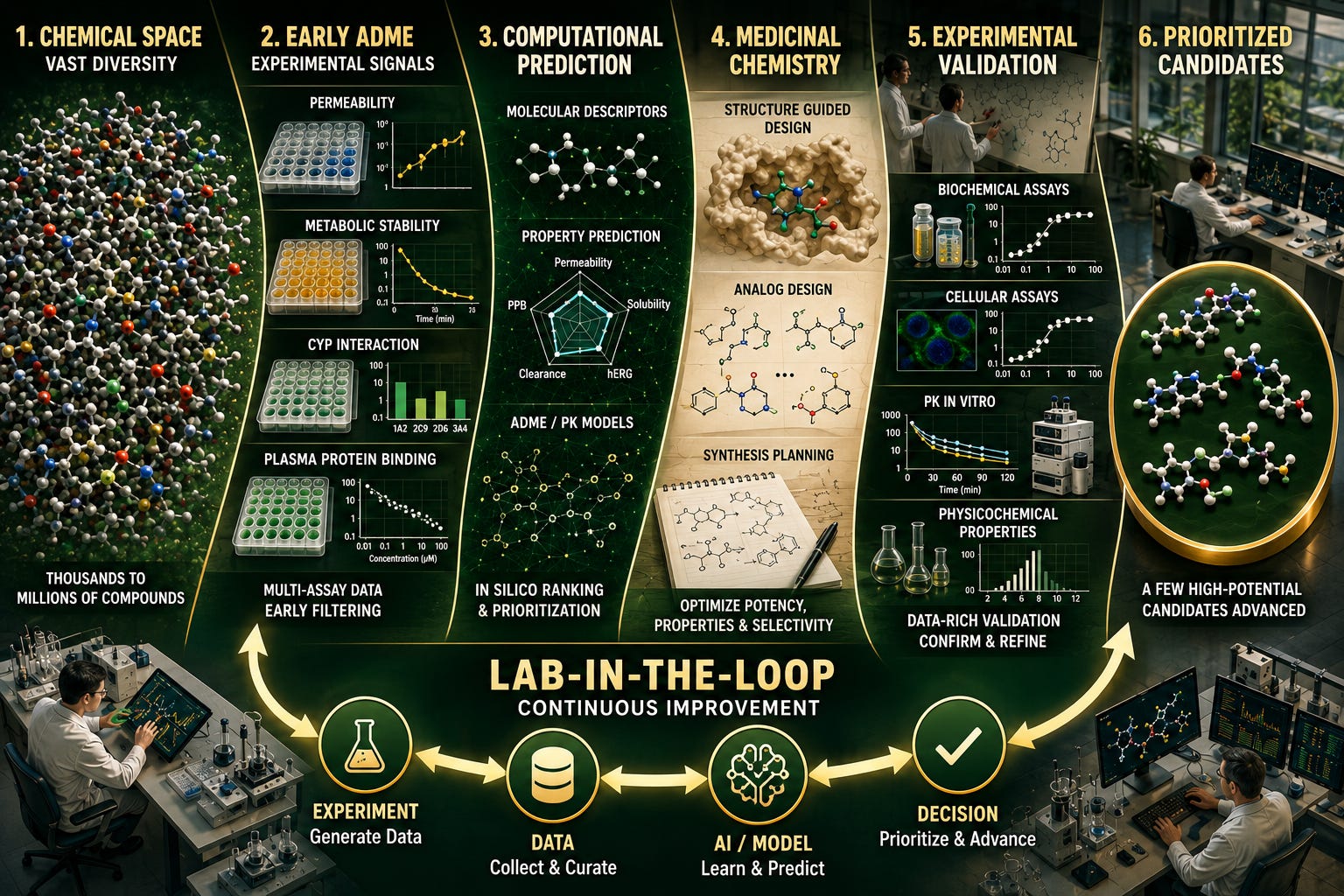
This shift addresses several long-standing inefficiencies. First, early ADME data directly informs medicinal chemistry strategies, allowing scientists to prioritize compounds with favorable profiles or modify scaffolds proactively. Second, it mitigates resource expenditure by avoiding pursuit of molecules likely to encounter pharmacokinetic hurdles. Third, early ADME integration supports a more iterative ‘lab-in-the-loop’ discovery workflow, where experimental results dynamically refine computational predictions.
Innovation Through Partnership
ADME-One emerges from a strategic alliance between three specialized organizations, each bringing complementary expertise to the integrated service:
- Ginkgo Datapoints: Leveraging its robust data infrastructure and computational capabilities to facilitate high-throughput experimental ADME assays and data management within the U.S.
- Tangible Scientific: Providing operational excellence and wet-lab execution expertise, thereby bridging the gap between AI-based compound design and practical assay validation.
- Inductive Bio: Employing state-of-the-art AI models trained to forecast human pharmacokinetics based on molecular structure and experimental results, with demonstrated superiority in public predictive benchmarks.
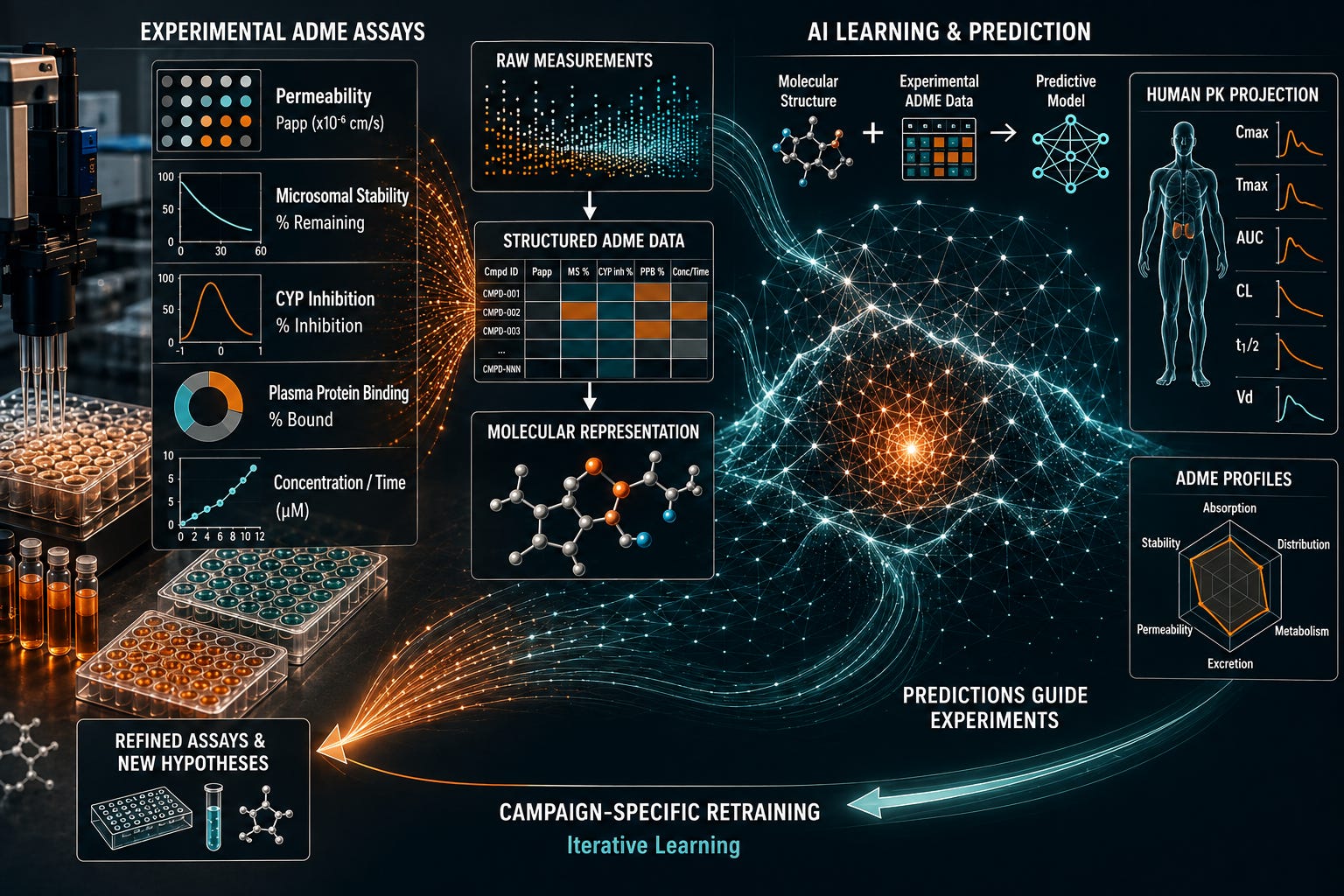
Through this collaboration, ADME-One offers a single-SKU product that provides customers with tiered ADME profiling integrated with computational predictions and compound handling, all underpinned by a robust feedback loop wherein experimental data refines AI models in real time.
AI-Driven Pharmacokinetic Projections with Inductive Bio Models
A core strength of ADME-One lies in the incorporation of Inductive Bio’s predictive AI algorithms. These models have consistently outperformed established public tools in blind challenges such as OpenADMET-ExpansionRx, which evaluated predictions of nine ADMET endpoints across real drug discovery datasets.
Inductive Bio’s models excel by harnessing campaign-specific retraining, enabling zero-shot predictive capabilities to rapidly adapt to novel chemical spaces. This adaptability reduces dependency on extensive historical data while delivering high confidence in human pharmacokinetic projections. Consequently, the service provides actionable insights during the critical early phases of compound selection, directly influencing medicinal chemistry direction and portfolio risk management.
U.S.-Based, Cost-Effective and Responsive Service Offering
Another important feature of ADME-One is its full U.S.-based execution, a decisive advantage amid increasing globalization concerns and regulatory shifts such as the BIOSECURE Act, which incentivizes domestic drug discovery operations. The pricing model undercuts many offshore CRO alternatives, presenting academic institutions, biotech startups and pharma companies an accessible and rapid route to early-stage ADME data.
By localizing service delivery and embedding tangible scientific expertise, the initiative mitigates operational delays and communication gaps frequently encountered when integrating AI and experimental workflows. This cohesion ensures that clients receive not just data but interpreted, curated insights ready to inform actionable decisions.
Implications for AI-Enabled Drug Discovery Pipelines
ADME-One exemplifies a growing trend within medicinal chemistry and drug discovery whereby experimental and computational components are coupled via continuous learning frameworks. Medvolt, as a leader in AI-driven biotechnology and computational chemistry, recognizes that such integrative approaches markedly enhance predictive accuracy and accelerate timeline compression.
Specifically, the deployment of packaged, retrainable ADME panels within early hit identification yields multiple benefits:
- Improved Hit-to-Lead Efficiency: Computational models informed by real-world ADME data guide prioritization, focusing synthetic efforts on candidates with optimal developability.
- Reduced Attrition Rates: Early identification of metabolic liabilities prevents progression of poor candidates.
- Data-Centric Workflow Integration: Seamless data exchange between wet-lab assays and AI models cultivates iterative refinement, leading to robust, generalizable predictions.
- Scalability and Reproducibility: A standardized Tier 1 panel ensures comparability across campaigns and users, supporting broader adoption and benchmarking.
Future Perspectives and Industry Impact
The launch of ADME-One signals a deliberate repositioning of ADME profiling within the drug discovery value chain. By validating the feasibility and utility of early-stage ADME assessment, it paves the way for broader integration of AI-enhanced experimental workflows.
In parallel, the appointment of seasoned industry executives, including leadership with experience at Novartis and Valo Health, underscores the commercial maturity and strategic intent behind this initiative. Presentations of validation data and case studies at forums such as the New England Drug Metabolism Discussion Group further demonstrate commitment to transparency, collaboration and continuous scientific exchange.
Looking ahead, the converging pathways of AI, multi-omics and high-throughput experimentation will continue to transform the paradigm of drug discovery. Services like ADME-One not only exemplify this convergence but set a precedent for how biotechnology companies can offer integrated platforms combining data generation, computational analysis and compound logistics.
Conclusion
ADME-One represents a pragmatic and scientifically rigorous advancement in early drug discovery, founded on a multi-disciplinary partnership that marries experimental assay capability with cutting-edge AI pharmacokinetic modeling. Through comprehensive Tier 1 profiling delivered rapidly and cost-effectively within the U.S., it empowers discovery teams to embed ADME considerations into initial compound triage.
For stakeholders invested in enhancing the efficiency and predictive power of drug development, ADME-One highlights the tangible benefits of early, AI-informed ADME evaluation. As the drug discovery landscape increasingly embraces integrated data workflows, such innovations are poised to become standard components of streamlined, knowledge-driven pipelines.
Medvolt continues to advocate and contribute to these advances through its expertise in AI-driven molecular modeling, enzyme engineering and accelerated R&D knowledge curation, supporting the evolution of smarter, more efficient therapeutic design.

