Harnessing AI-Driven Drug Discovery: Unlocking Innovation in Biotechnology with Data-Informed Insights
AI-driven drug discovery is accelerating biotechnology innovation through molecular modeling, multi-omics integration, and predictive analytics.
The Convergence of Technology and Biotechnology: A Paradigm Shift
In the past decade, the biotechnology and pharmaceutical sectors have undergone profound transformations. Driving these advancements are cutting-edge innovations such as artificial intelligence (AI), computational chemistry, and data analytics. This convergence of computational power and life sciences has not only accelerated the pace of drug discovery but has also redefined value creation in mid-cap biotechnology companies—a sector that analysts predict may offer over 25% growth potential in the near term.
AI-driven platforms, like those developed by industry leaders such as Medvolt, are creating new opportunities for precise, data-driven decision-making in drug R&D. From molecular modeling and free energy perturbation (FEP) simulations to multi-omics data analysis and fragment-based drug design, these technologies provide actionable insights that shorten development timelines and enhance success rates.
Mid-Cap Biotech as an Investor Opportunity
Historically overshadowed by their large-cap counterparts, mid-cap biotechnology companies are gaining attention as innovation incubators. With modest valuations and promising pipelines, they strike an optimal balance between risk and reward for savvy investors. Analysts agree that the integration of AI-driven technologies in R&D workflows is catalyzing this growth trend.
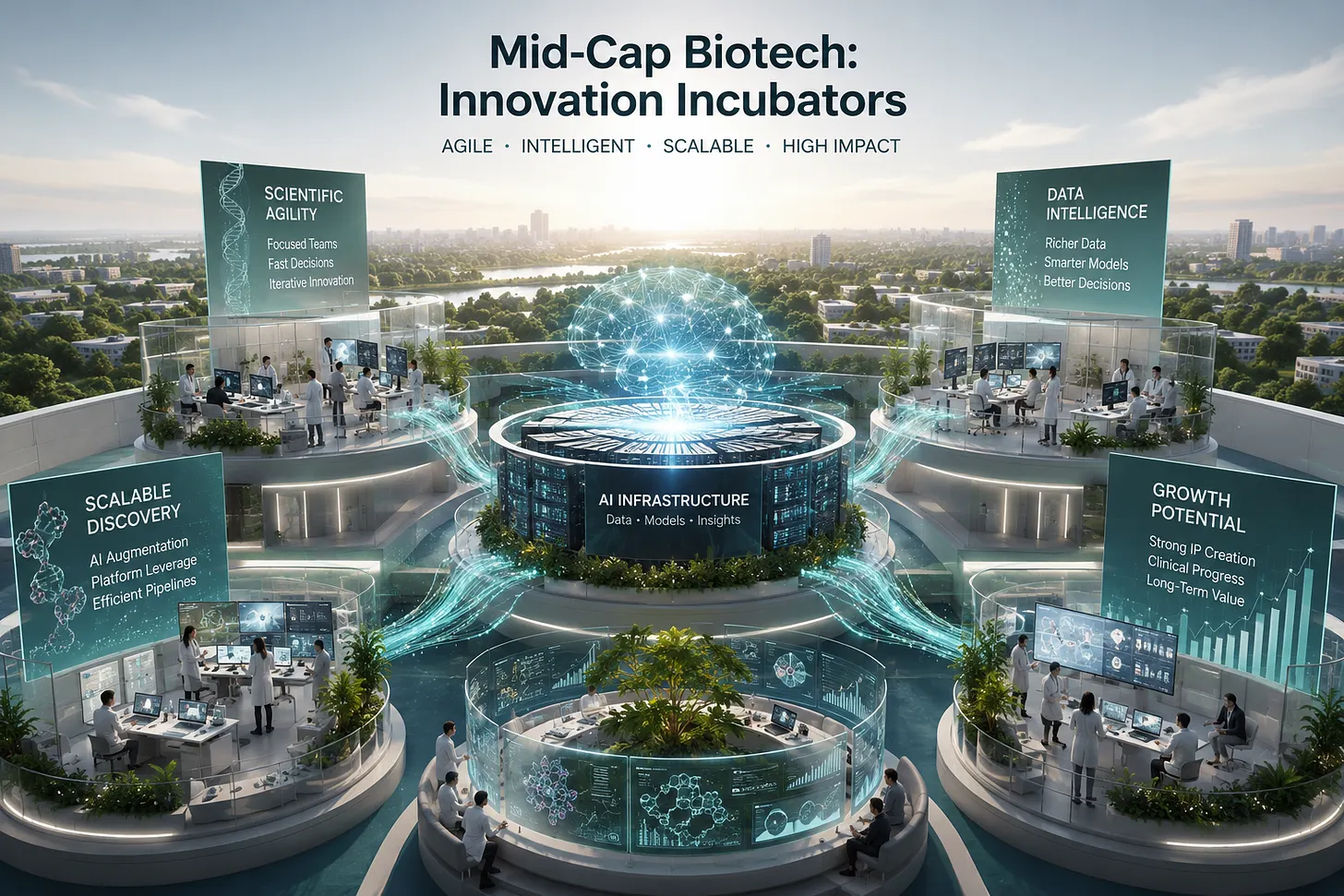
For example, AI-enabled platforms streamline high-throughput experimentation and predictive analytics. Instead of relying on traditional trial-and-error methods, AI technologies curate data to identify promising leads, optimize molecular binding affinities, and improve pharmacokinetics—all while saving time and resources.
AI in the Molecular Discovery Workflow
1. Molecular Modeling and FEP Simulations:
At the core of computational drug discovery lies molecular modeling. AI algorithms assist in simulating protein-ligand interactions to predict how potential drug candidates bind to their targets. Free Energy Perturbation (FEP) simulations further refine these insights, enabling the ranking of molecular candidates based on their binding energy accuracy.
2. Multi-Omics Data Integration:
Taking drug development beyond single datasets, multi-omics platforms integrate genomics, transcriptomics, proteomics, and metabolomics to contextualize disease pathways. This systems-level approach allows scientists to identify novel biomarkers or gain deeper insights into gene-environment interactions.
For instance, consider oncology research. Multi-omics analyses guided by AI can unravel the complex genetic drivers of cancer, guiding the design of targeted therapies with minimal off-target effects. Companies leveraging such platforms position themselves not just as therapeutic developers but as data-driven precision medicine leaders.
3. Fragment-Based Drug Discovery (FBDD:
Fragment-based design, a cornerstone in modern medicinal chemistry, utilizes small molecular fragments to optimize drug properties. Combined with machine learning, FBDD platforms can automate processes like fragment growing and merging, enhancing the efficiency of hit identification. The enriched chemical space coverage brought by AI ensures the discovery of novel drugs previously inaccessible using traditional screening methods.

Scaling Innovation with Predictive Toxicology
Safety remains a significant bottleneck in drug development. AI advances in predictive toxicology tackle this challenge by using models that assess the potential toxicity of compounds early in development. These technologies integrate historical datasets and molecular descriptors to predict adverse effects with high confidence, reducing late-phase failures.
Medvolt has been at the forefront of deploying predictive toxicology workflows. By automating the analysis of safety pharmacology and ADMET (absorption, distribution, metabolism, excretion, and toxicity) properties, such platforms are enabling drug candidates to proceed to clinical trials with greater reliability—saving millions in sunk costs.

Building Trust Through Data Transparency and Validation
Adopting AI-based tools also emphasizes the need for data integrity and reproducibility in drug discovery. Analysts have noted an increase in investor confidence as companies implement rigorous model validations. Transparent datasets, backed by published methodologies, allow stakeholders to evaluate the credibility of results.
While the integration of AI is promising, robust experimental validation remains crucial. Models incorporating AI are only as reliable as the quality of input data. Consequently, companies that invest in iterative learning—where algorithm outputs are cross-validated with experimental observations—set themselves apart as leaders in reliability.
Sectoral Implications for Investment Strategy
Certain therapeutic areas stand out as benefiting robustly from these technological advancements:
- Rare Diseases and Orphan Drugs: High-throughput sequencing combined with AI narrows down mutation hotspots, enabling therapies for conditions with limited prior research.
- Oncology: With its application in immunotherapy and precision medicine, AI in oncology streamlines neoantigen discovery, tumor profiling, and immune landscape characterization.
- Antimicrobial Resistance (AMR): AI models facilitate the identification of novel antimicrobial agents, addressing the global AMR crisis by predicting resistance pathways.
From a sectoral viewpoint, mid-cap biotechs exploring these areas are well-poised to deliver higher-than-average returns, especially underpinned by AI-driven cost management and partnering with larger peers for commercialization.
Conclusion: A New Era of R&D
The use of AI in biotechnology heralds an era where therapeutic innovation is more efficient, cost-effective, and precise. For investors, this pivot signifies an unprecedented opportunity to capitalize on the R&D resurgence, particularly in mid-cap companies leveraging platforms like Medvolt’s AI-powered workflows.
The foundation of this transformation lies in the synergistic integration of advanced computational chemistry, multi-omics, and real-time predictive analytics. Whether it’s optimizing molecular leads or streamlining preclinical testing, AI is enabling these companies to translate discoveries into actionable therapeutic products with swifter timelines.
As analysts point to a potential rally of over 25% in this sector, stakeholders—whether scientists, investors, or policy advocates—should grasp the transformative role of AI-driven platforms in influencing the future of biomedical research and market dynamics.