Harnessing AI to Enhance Pharma Integrity: Preventing Drug Recalls, Combating Counterfeits, and Elevating Patient Safety
AI is strengthening pharma integrity by preventing recalls, detecting counterfeits, improving supply chains, and enhancing patient safety.
The Challenge of Drug Recalls: Beyond the Headlines
The pharmaceutical industry operates at the confluence of complexity and criticality, where any disruption—from a flawed product batch to counterfeit circulation—can jeopardize patient safety and public trust. Recent advancements in artificial intelligence (AI) are increasingly instrumental in addressing these longstanding challenges, empowering pharmaceutical companies to prevent drug recalls, detect and deter fake medicines, and enhance overall patient safety. This article delves into how AI is reshaping these key pharmaceutical processes with scientific rigor, operational precision, and actionable insights, while spotlighting the capabilities of AI-driven R&D firms such as Medvolt.
Drug recalls represent not only a significant regulatory and financial challenge for pharmaceutical companies but also a direct threat to patient health. Recalls may arise from contamination, incorrect potency, packaging errors, or stability issues—all of which can escape traditional quality control (QC) workflows due to their inherent complexity. Historically, quality inspections have relied heavily on manual processes, limited sampling, and reactive measures post-distribution, often leading to delayed identification of problematic batches.
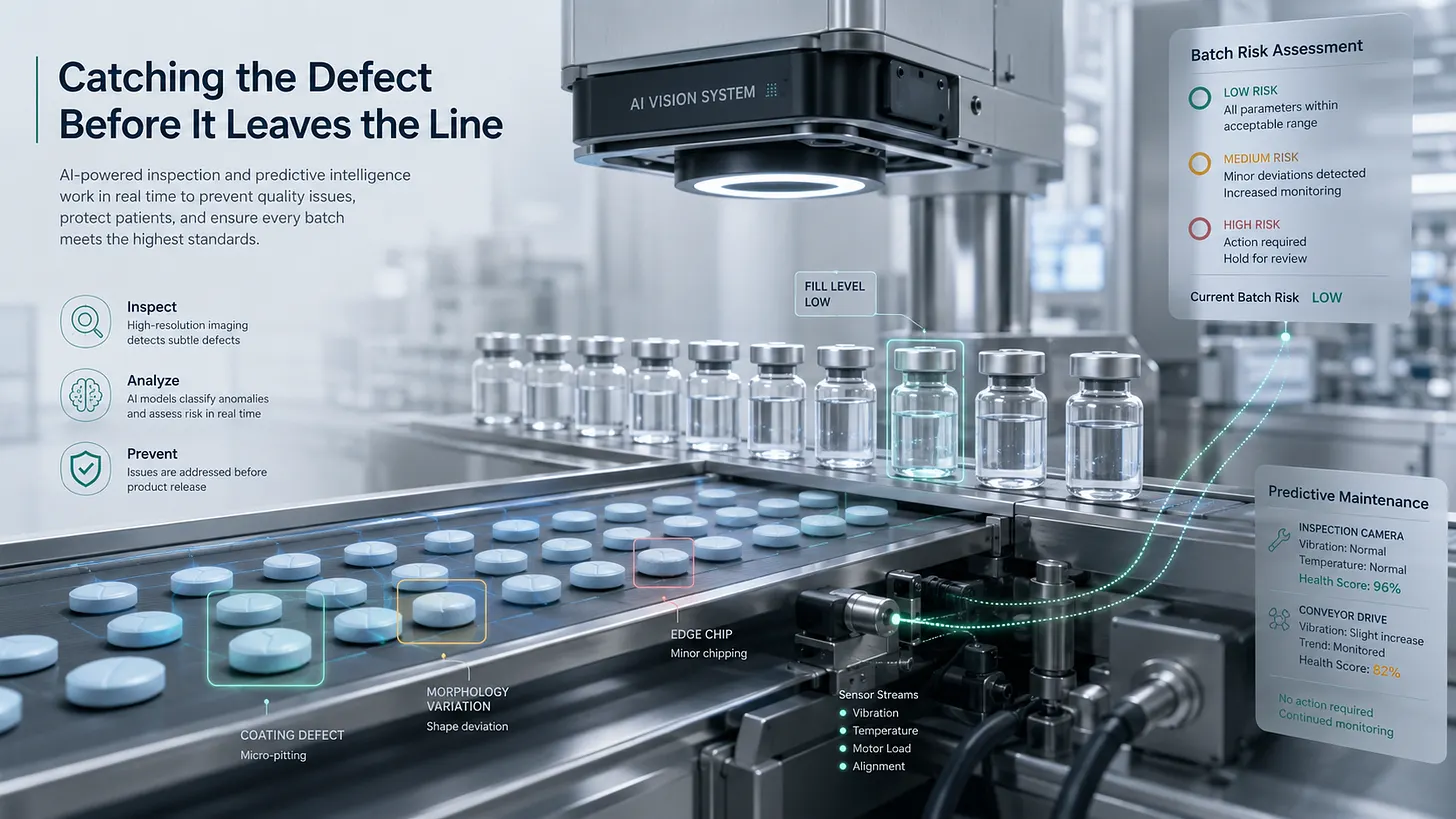
AI introduces an anticipatory layer to quality assurance, dramatically improving detection accuracy and operational responsiveness through:
- AI-augmented Computer Vision: High-resolution imaging combined with deep learning algorithms enhances defect detection accuracy on manufacturing lines. Unlike traditional human inspections that can achieve roughly 90-95% accuracy under fatigue or high throughput, AI models consistently identify subtle deviations in pill morphology, color uniformity, or coating anomalies with accuracy rates exceeding 99%. This capability reduces the risk of releasing substandard batches.
- Predictive Maintenance and Anomaly Detection: Sensor data from manufacturing equipment can be analyzed in real time using AI to predict failures or process drifts before they affect product quality. By forecasting machinery malfunctions or deviations in process parameters (e.g., temperature, humidity, mixing speed), companies can implement timely interventions, thus preventing batch failures.
- Batch-level Risk Scoring: Integrating multi-modal data—ranging from raw material variability, production metrics, to environmental factors—AI-driven models can assign risk scores to each batch in near real-time. Such granular risk assessment enables sampling prioritization and targeted testing, increasing efficiency without compromising safety.
Enhancing Supply Chain Robustness to Prevent Shortages
Beyond production quality, AI optimizes supply chains to minimize drug shortages that can indirectly lead to patient harm. By leveraging advanced predictive analytics and demand forecasting, AI systems enable companies to maintain optimal stock levels across the distribution network:
- Granular Demand Forecasting: Machine learning models analyze historical sales data, epidemiological trends, and even socio-economic indicators at geographic and temporal scales, resulting in demand forecasts with improved accuracy by up to 30%. This precision mitigates the mismatch between supply and demand that can otherwise cause stockouts or overstocking.
- Dynamic Replenishment Algorithms: AI monitors inventory in real time and orchestrates replenishment across warehouses, distribution centers, and retail points. Rapid response to supply chain disruptions such as delayed shipments or sudden demand spikes further reduces the risk of medicine unavailability.
By ensuring consistent delivery from factory to patient, AI fortifies one of the most vulnerable links in pharma’s mission: timely medication access.
Combating Counterfeit and Substandard Medicines with AI
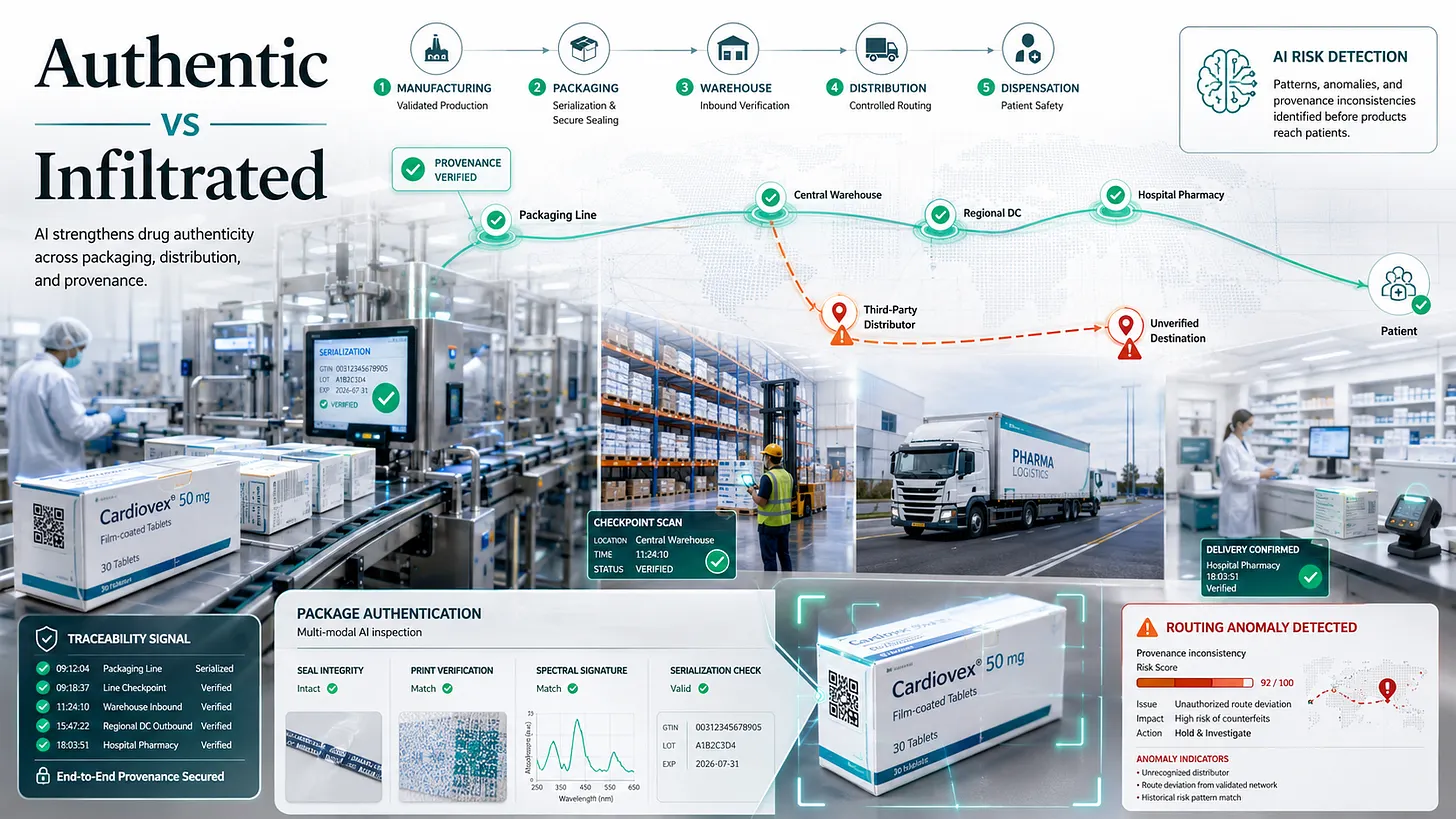
Counterfeit pharmaceuticals constitute a global public health threat compromising treatment efficacy and patient trust. Conventional tracking approaches—like holograms, security labels, or serialized pack identifiers—are essential but insufficient on their own. AI boosts anti-counterfeiting efforts in the following ways:
- Pattern Recognition in Distribution Networks: AI analyzes procurement and distribution data to identify abnormal routing, stocking patterns, or suspicious volume spikes indicative of counterfeit introduction. Such early-warning systems enable intervention upstream before counterfeit products reach patients.
- Authentication via Imaging and Spectroscopy: Advanced AI algorithms decode subtle differences in packaging or molecular signatures captured by hyperspectral imaging or Raman spectroscopy, verifying authenticity beyond visual inspection.
- Blockchain and AI Integration: Coupling blockchain’s immutable ledger with AI’s predictive analysis enhances transparency and traceability of drug provenance. AI continuously monitors blockchain data for anomalies or compliance deviations, facilitating faster detection of counterfeit infiltration.
Patient Safety: From Pharmacovigilance to Precision Monitoring
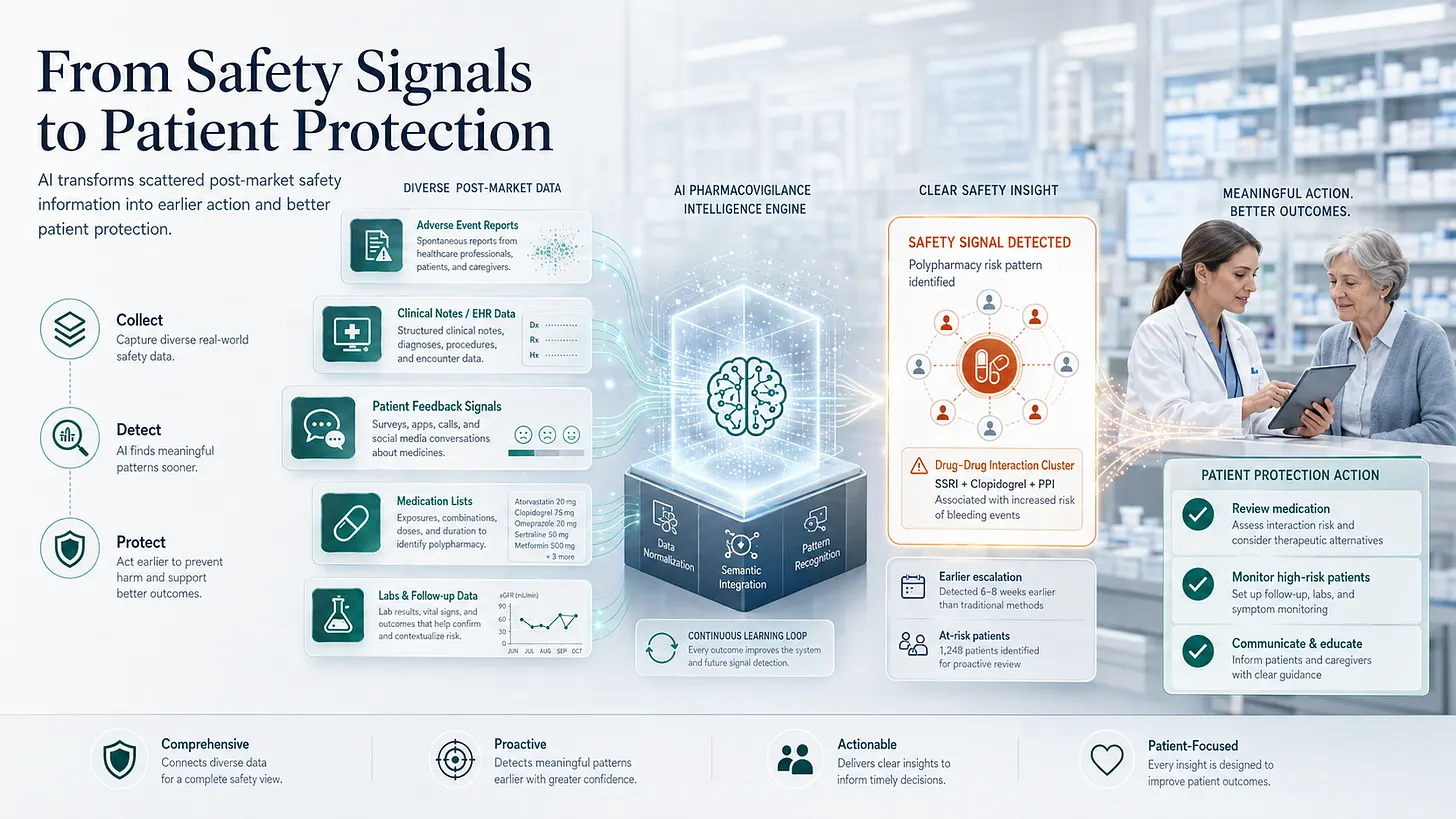
Post-market surveillance of adverse drug reactions (ADRs) remains a data-intensive bottleneck. AI-powered natural language processing (NLP) enables efficient mining of adverse event reports, social media, and patient feedback to detect safety signals earlier and more reliably than manual review. Moreover, AI models can investigate polypharmacy interactions and patient-specific risk factors integrating electronic health records (EHR) and multi-omics data.
Such capabilities not only accelerate regulatory responses but support more personalized therapeutic strategies, potentially reducing adverse effects through precision medicine.
Medvolt’s Contribution: Integrating AI Across the Pharma Value Chain
Medvolt exemplifies the integration of AI in pharmaceutical R&D and manufacturing with a focus on explainability and robust human-AI collaboration. Their platform incorporates:
- Computational Chemistry and Enzyme Engineering: Employing AI-driven molecular modeling and free energy perturbation (FEP) simulations to optimize small molecule candidates and biocatalysts simultaneously enhances early-stage safety profiles, reducing downstream risks that may precipitate recalls.
- Knowledge Curation Engines: Leveraging AI-curated biomedical knowledge graphs accelerates hypothesis generation and regulatory intelligence, informing safer design and manufacturing strategies.
- End-to-End Analytical Workflows: Combining AI-powered imaging, process analytics, and supply chain optimization modules to provide an integrated risk management ecosystem that aligns with regulatory standards and pharma best practices.
Medvolt emphasizes transparency, with AI decisions complemented by expert review and validated against extensive datasets, building the trust necessary for critical applications impacting patient outcomes.
Regulatory Landscape and the Path Forward
Regulatory agencies across the US, Europe, and Asia increasingly recognize the potential of AI in pharma quality and safety sectors. Frameworks encouraging explain ability, human oversight, and methodical validation of AI tools are being established to ensure that AI becomes a reliable augment rather than an opaque black box.
The future of pharmaceutical innovation will likely hinge on the parallel advancement of drug discovery and AI-powered quality assurance and safety systems. While breakthrough molecules drive headlines, the silent but profound value lies in preventing adverse outcomes that compromise therapeutic success.
Conclusion
Artificial intelligence is no longer a theoretical enhancement but a practical necessity for modern pharmaceutical operations seeking to uphold patient safety and product integrity. By reducing drug recalls, enhancing supply chain precision, and detecting counterfeit medicines with unprecedented efficacy, AI fosters a more resilient and transparent pharma industry. Leaders like Medvolt harness these technologies with scientific precision and regulatory awareness, paving the way for safer medicines reaching patients reliably.
The ultimate measure of AI’s success in pharma is not just novel discoveries but in averting crises ensuring the recall that never happens, the fake batch never sold, and the patient safeguarded every step of the way.