The Rare Disease Advantage: Why Orphan Drugs Now Have Better Success Rates Than Blockbuster Programs
Rare diseases are reshaping drug discovery by combining precise biology, AI-driven insights, and faster clinical development into a new innovation model.
How Precision Biology, Better Patient Selection, and AI Are Reshaping the Economics of Drug Development
For decades, the pharmaceutical industry was driven by the pursuit of blockbuster drugs—therapies designed to treat common diseases affecting millions of patients worldwide. The commercial rationale was simple: larger patient populations created larger markets, making blockbuster medicines the dominant strategy for pharmaceutical investment. This approach produced some of the most successful drugs in medical history and shaped the modern pharmaceutical landscape.
Over the past two decades, however, a significant shift has emerged. Pharmaceutical companies, biotechnology startups, and investors are increasingly focusing on rare diseases and orphan drugs. What was once considered a niche area of healthcare has become one of the fastest-growing segments of pharmaceutical innovation. This transformation is not driven solely by regulatory incentives or market exclusivity. It reflects a deeper scientific reality: many orphan drug programs achieve higher development success rates because they begin with a more precise understanding of disease biology. In an era increasingly defined by precision medicine and artificial intelligence, rare diseases are proving that smaller patient populations can sometimes lead to better scientific decisions.
Understanding Rare Diseases and Orphan Drugs
A rare disease is generally defined as a condition that affects a relatively small percentage of the population. Although each individual disease may impact only a limited number of patients, there are more than 7,000 recognized rare diseases, collectively affecting an estimated 300 million people worldwide.
Most rare diseases are genetic in origin and often appear early in life. Many remain poorly understood and lack effective treatment options. To stimulate innovation in these underserved areas, regulatory agencies introduced orphan drug programs that offer benefits such as:
- Market exclusivity
- Tax incentives
- Reduced regulatory fees
- Accelerated review pathways
While these incentives initially attracted attention for their economic value, the scientific advantages of rare disease research have become equally compelling.
Why Traditional Blockbuster Drug Development Has Become More Difficult
Developing medicines for common diseases involves enormous biological complexity. Conditions such as diabetes, Alzheimer’s disease, cardiovascular disorders, and many cancers are influenced by numerous genetic, environmental, and lifestyle factors. In many cases, a single diagnosis actually represents multiple biological subtypes with distinct disease mechanisms.
As a result, identifying therapeutic targets that work consistently across broad patient populations becomes increasingly challenging. Clinical trials often require thousands of participants from diverse backgrounds, introducing substantial variability that can obscure treatment effects and increase the risk of failure. Even when promising drug candidates emerge, demonstrating efficacy across heterogeneous populations remains one of the greatest challenges in pharmaceutical development.
Rare Diseases Often Present Clearer Biology
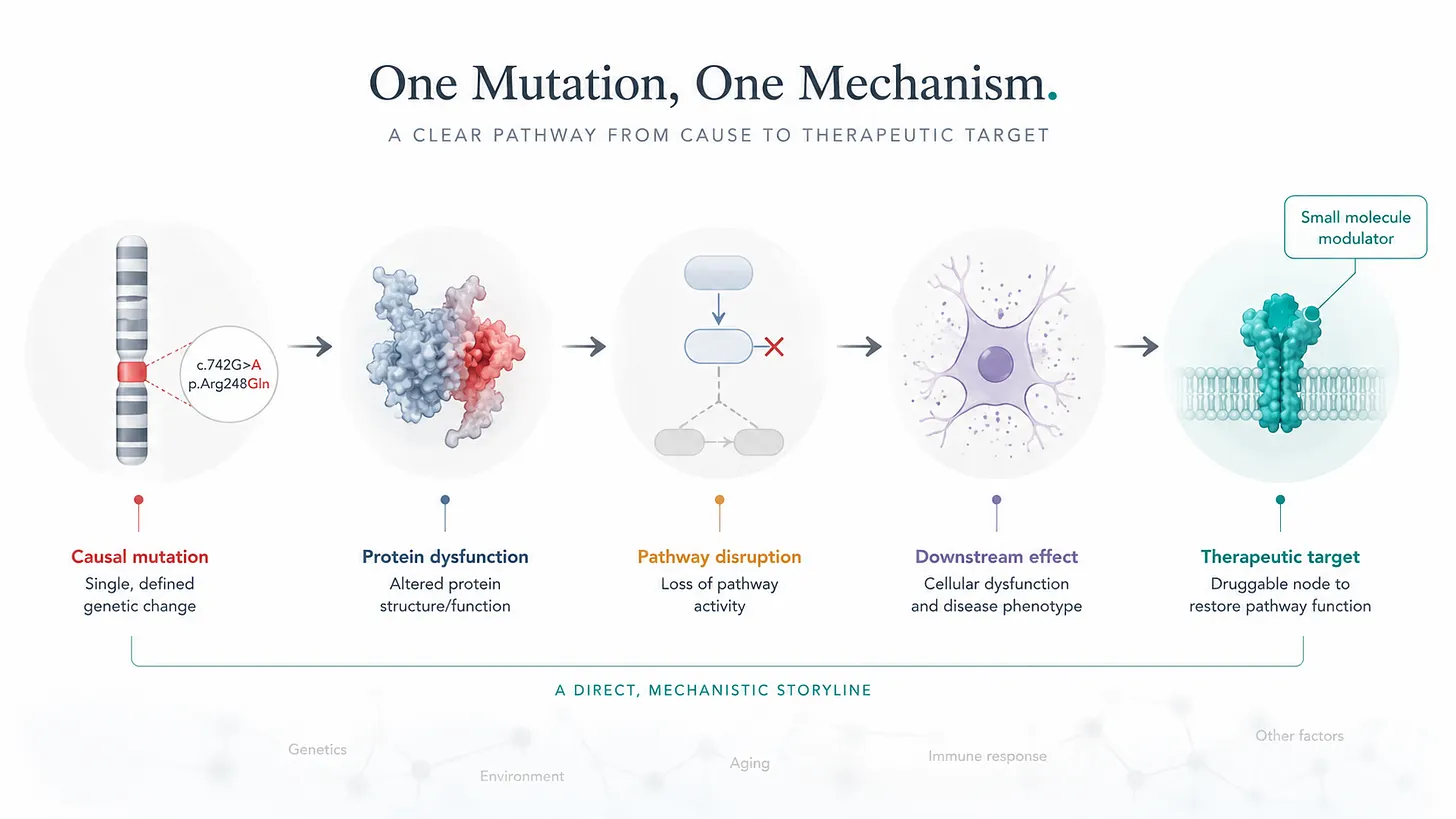
Many rare diseases, particularly monogenic disorders, offer a fundamentally different starting point. Instead of involving dozens of interacting biological pathways, these conditions often arise from mutations in a single gene or disruptions within a clearly defined molecular mechanism.
Researchers can frequently identify:
- The causal genetic mutation
- The affected protein or biological pathway
- The downstream molecular consequences
This level of biological clarity significantly reduces uncertainty during target identification and validation. Rather than relying on weak statistical associations, researchers can build therapeutic strategies around well-established disease mechanisms, creating a stronger scientific foundation throughout the drug discovery process.
Better Biology Leads to Better Clinical Trials
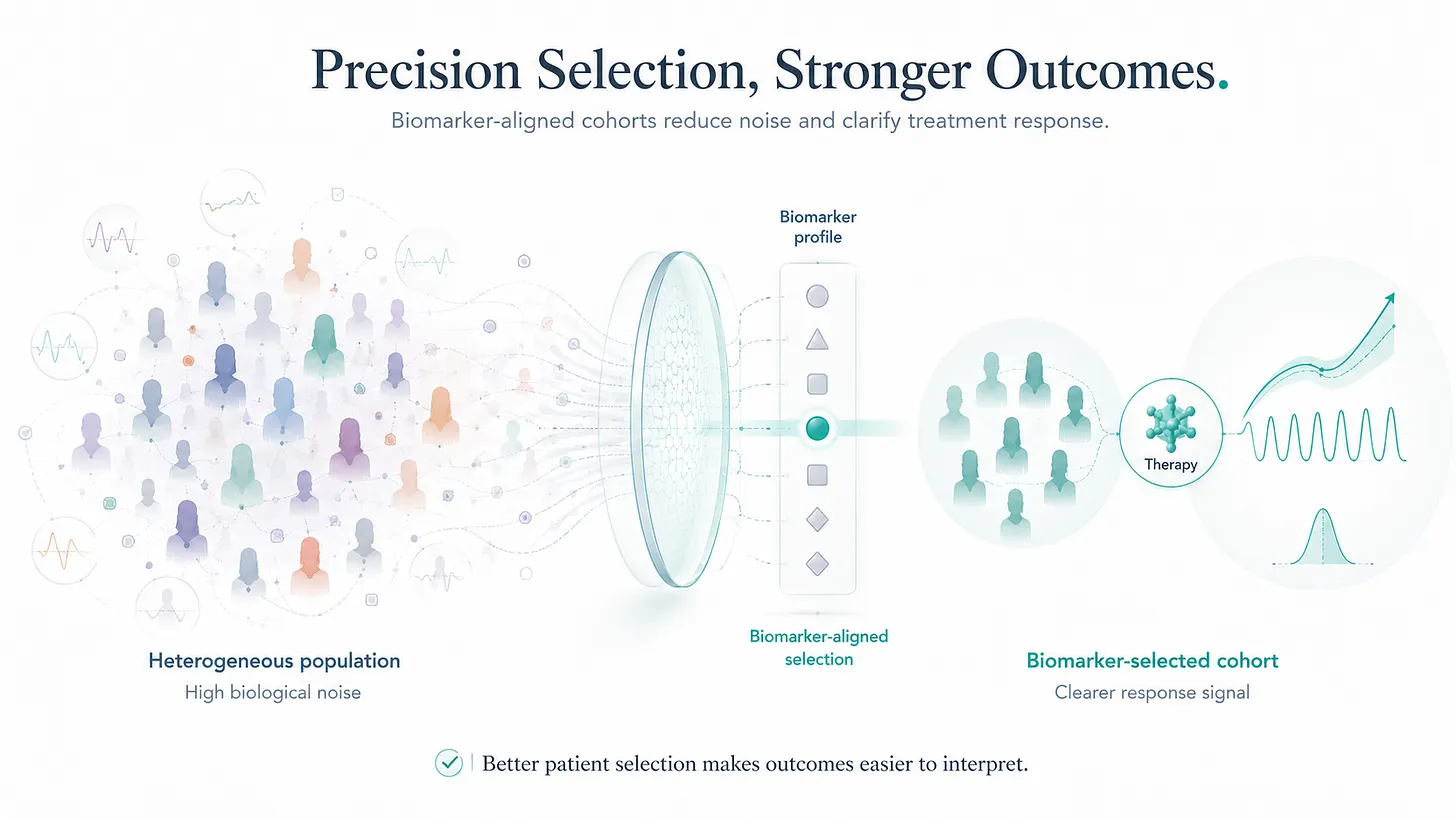
One of the greatest advantages of orphan drug development becomes apparent during clinical evaluation. Traditional blockbuster trials often struggle because patient populations are biologically diverse, making treatment responses difficult to interpret.
Rare disease trials, by contrast, often enroll patients who share the same underlying molecular defect. This provides several important advantages:
- More homogeneous patient populations
- Better-defined biomarkers
- More measurable treatment responses
- Clinical endpoints closely linked to disease biology
These factors improve the ability to detect therapeutic effects and contribute to higher probabilities of technical, clinical, and regulatory success. The lesson is straightforward: precision in biology often translates into precision in clinical outcomes.
Artificial Intelligence Is Amplifying the Rare Disease Opportunity
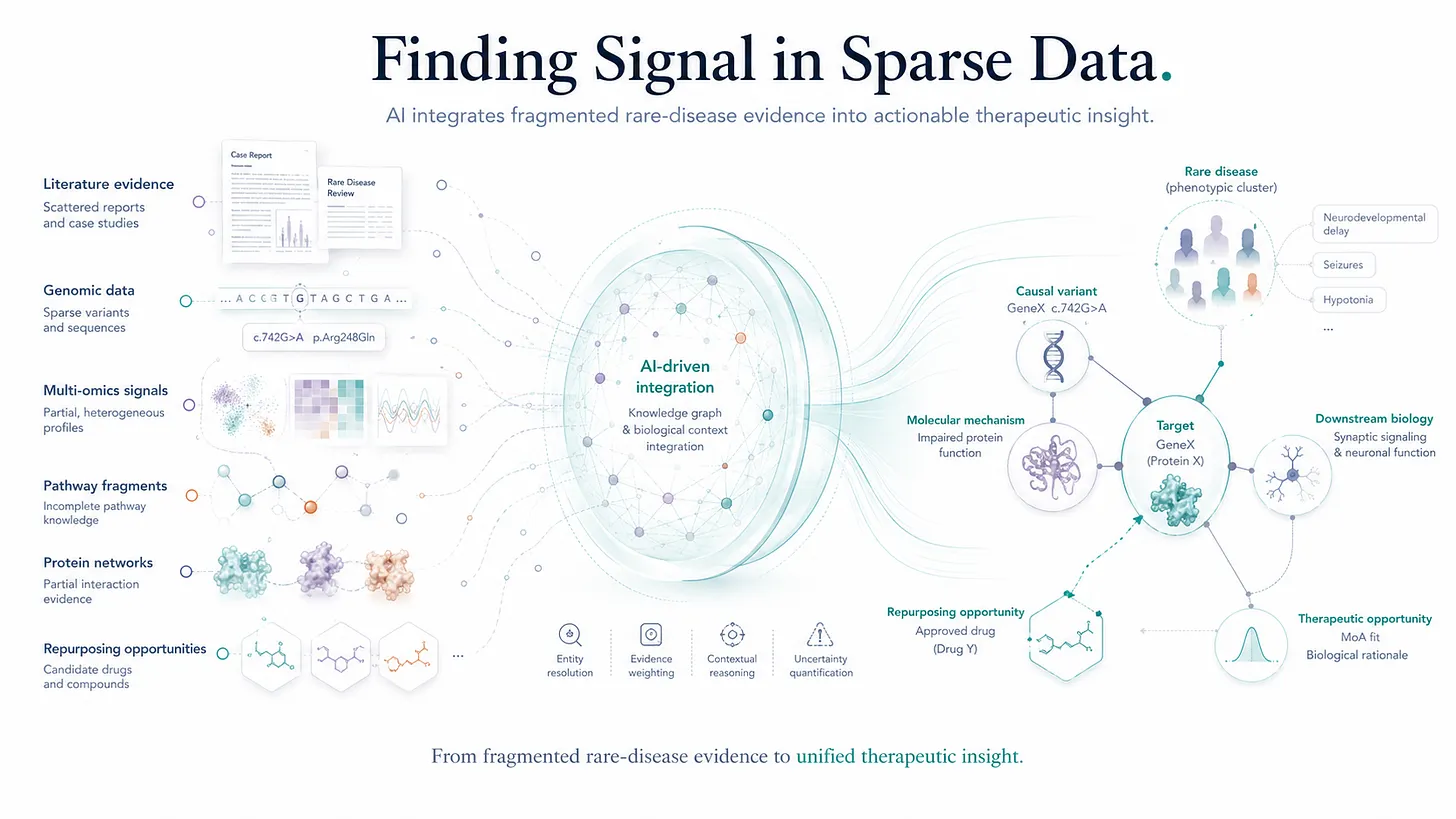
Although rare diseases offer clearer biological foundations, they also present unique research challenges. Patient populations are small, clinical datasets are limited, and available evidence is often scattered across publications, registries, genomic databases, and research institutions.
Artificial intelligence is helping overcome these limitations by integrating diverse sources of biological information and uncovering meaningful relationships within incomplete datasets. Modern AI systems can:
- Build knowledge graphs connecting genes, proteins, pathways, and diseases
- Identify hidden patterns within genomic and clinical datasets
- Extract insights from decades of scientific literature
- Generate hypotheses from fragmented evidence
For rare diseases, where every piece of information matters, these capabilities are particularly valuable and can dramatically accelerate research progress.
Drug Repurposing Is Creating New Opportunities
Rare disease programs have become major beneficiaries of computational drug repurposing. Many approved drugs already possess established safety profiles and proven manufacturing processes, making them attractive candidates for new therapeutic applications.
AI-driven analyses of biological networks, patient data, and molecular mechanisms are increasingly revealing opportunities to reposition existing therapies for entirely different diseases. For rare disease programs, drug repurposing offers several benefits:
- Shorter development timelines
- Reduced clinical risk
- Lower development costs
- Faster patient access to treatment
As computational methods continue to improve, repurposing is expected to play an increasingly important role in orphan drug innovation.
Precision Medicine and Rare Diseases Are Converging
The broader movement toward precision medicine is closely aligned with rare disease research. Rather than treating diseases as single diagnostic labels, precision medicine seeks to understand the molecular characteristics that distinguish one patient from another.
Rare diseases naturally embody this philosophy because many are defined by specific genetic variants, molecular mechanisms, or biological signatures. As a result, research strategies originally developed for orphan diseases are increasingly influencing approaches to more common disorders. Many cancers, for example, are now divided into genetically defined subtypes that require targeted therapies rather than universal treatment approaches.
In this way, rare disease research is helping shape the future of medicine far beyond its own patient populations.
Medvolt’s Approach: Accelerating Rare Disease Discovery Through Integrated AI
At Medvolt, we believe rare disease drug discovery represents one of the most promising opportunities for computational biology and artificial intelligence. Success in this field depends not on generating larger datasets, but on extracting deeper biological insights from limited yet highly valuable information.
Our platform integrates biomedical literature, genomic data, multi-omics evidence, disease pathways, protein interaction networks, and biomedical knowledge graphs into a unified knowledge-driven framework. This allows disease mechanisms to be analyzed within their broader biological context and helps identify therapeutic opportunities supported by multiple layers of evidence.
Our AI-guided workflows extend beyond target identification. Candidate molecules are designed using generative AI approaches and subsequently evaluated through:
- Structure-based drug design
- Molecular docking
- Molecular dynamics simulations
- Free energy calculations
- Physics-based validation
In addition to novel drug discovery, these capabilities support systematic drug repurposing efforts by evaluating existing therapeutic compounds against emerging rare disease targets. By combining biological intelligence, AI-powered analysis, and computational modeling into connected workflows, Medvolt aims to reduce uncertainty and accelerate the development of therapies for underserved patient populations.
The Future of Pharmaceutical Innovation
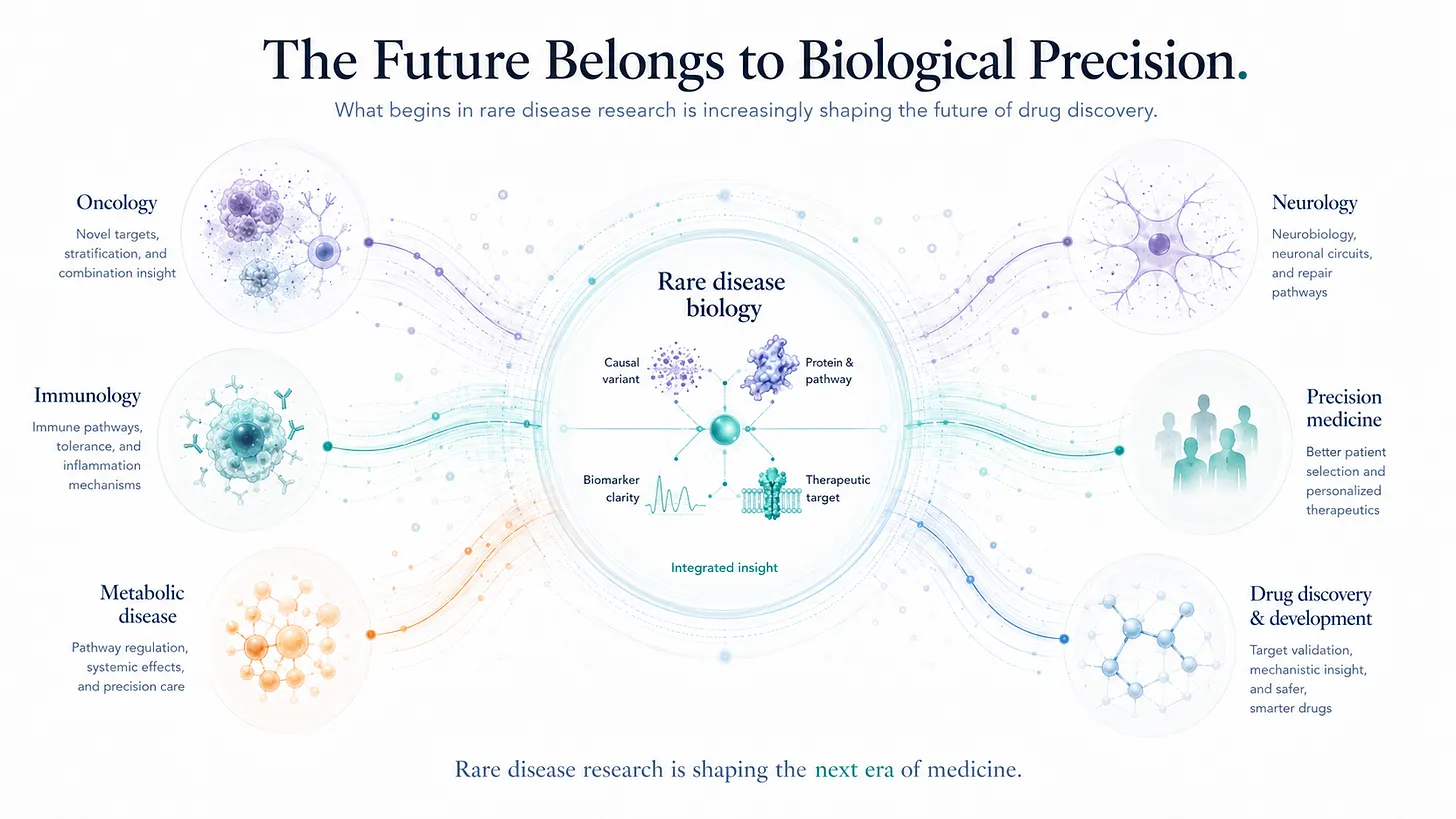
The growing success of orphan drugs reflects a broader transformation in pharmaceutical R&D. The industry is gradually shifting from maximizing patient numbers to maximizing biological understanding. Scientific precision is becoming more valuable than population size.
Artificial intelligence will accelerate this transition by enabling researchers to integrate genetics, molecular biology, clinical evidence, and computational modeling into increasingly sophisticated discovery systems. As rare disease research advances, many of the technologies, methodologies, and biological insights developed within this field will influence drug discovery across oncology, neurology, immunology, and numerous other therapeutic areas.
Rare diseases are no longer peripheral to pharmaceutical innovation. They are becoming one of its primary driving forces.
Conclusion
The rise of orphan drugs reflects more than changing market dynamics—it reflects a new understanding of how successful medicines are discovered. Rare diseases often provide clearer biology, stronger target validation, better patient stratification, and more interpretable clinical outcomes than traditional blockbuster programs.
When these scientific advantages are combined with artificial intelligence, knowledge-driven discovery, and advanced computational modeling, the result is a more precise and efficient approach to therapeutic development. At Medvolt, this philosophy shapes how we approach rare disease research by integrating biomedical knowledge, AI-powered target discovery, multi-omics analysis, structure-based drug design, molecular dynamics simulations, and physics-based validation into a unified platform.
The future of drug discovery may not belong to the largest patient populations. It may belong to the diseases that teach us biology most clearly.