


WHO Science Council Renewal: Navigating the Intersection of AI, Gene Editing and Emerging Technologies in Global Health
Explore how the renewed WHO Science Council is addressing AI, gene editing, emerging biotechnologies, and ethical innovation to advance global health.
The renewal of the World Health Organization’s (WHO) Science Council marks a pivotal development in global health governance as the world braces for transformative advances in artificial intelligence (AI), gene editing and emergent biotechnologies. The reconstituted council gathers 21 internationally acclaimed scientists and technology experts to advise WHO on harnessing scientific innovation responsibly and equitably to address pressing health challenges worldwide. This initiative underscores the growing interface between science, ethics, policy and technology an arena where AI-driven platforms, such as those developed by Medvolt, play a crucial role in shaping the future of healthcare research and delivery.
The Evolving Scientific Landscape Shaping Global Health
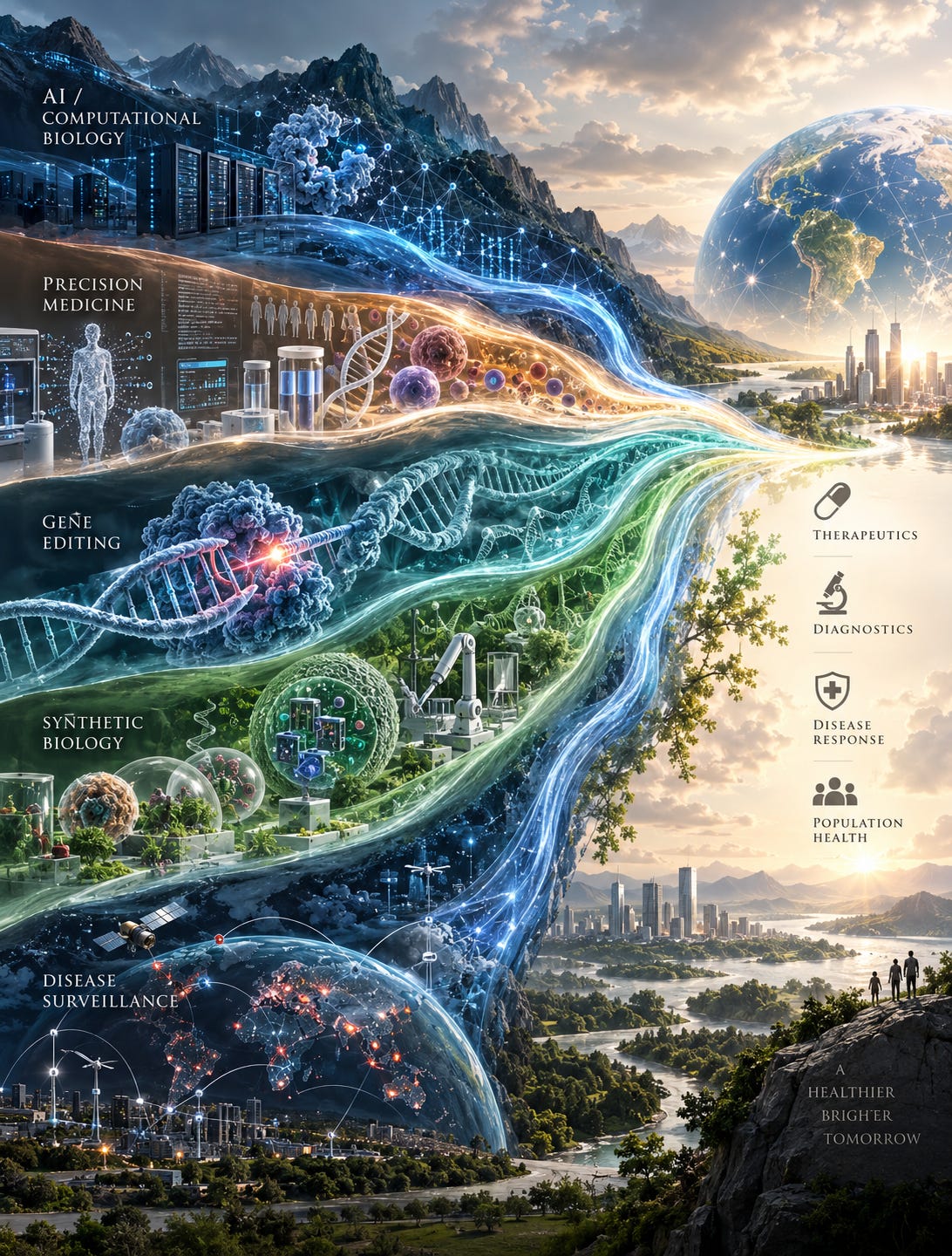
Scientific progress in healthcare is accelerating exponentially, fuelled by advances in computational biology, synthetic biology, precision medicine and machine learning. AI applications have transcended theoretical boundaries, now underpinning capabilities such as molecular modeling, structure-based drug design, multi-omics data integration and real-time disease surveillance. Concurrently, gene editing technologies including CRISPR-Cas systems offer unprecedented possibilities for the treatment and potentially the eradication of genetic disorders, infectious diseases and cancers.
However, these rapid developments pose complex challenges. They demand concerted oversight to ensure innovations do not exacerbate existing health inequities or introduce unintended risks. The WHO Science Council aims to operate as an early-warning and advisory mechanism, capable of forecasting scientific trends, evaluating their safety and ethical implications and providing guidance on equitable deployment across diverse health ecosystems.
WHO Science Council’s Mandate: Strategic Foresight in Science and Technology
Serving as WHO’s principal external advisory body on scientific affairs, the council’s broadened mandate exemplifies a proactive rather than reactive approach to biomedical innovation. Its members encompass a broad scientific spectrum public health experts, biomedical researchers, computational biologists, precision medicine practitioners and engineers representing geographic and demographic diversity including youth voices. This interdisciplinarity is vital to comprehensively assess how emerging technologies like AI-driven drug discovery, synthetic biology and robotics could reshape healthcare policy and delivery.
The council’s mandate involves:
- Monitoring and analyzing breakthrough scientific discoveries and their translational potential.
- Advising on risk mitigation linked to novel technologies.
- Identifying opportunities to democratize access to advanced therapeutics and diagnostics.
- Guiding ethical frameworks for genome editing and AI integration in medicine.

AI in Drug Discovery: Convergence with Global Health Priorities
Artificial intelligence, particularly when integrated with computational chemistry and systems biology, has become central in the discovery and development of novel therapeutics. Platforms leveraging AI for molecular modeling, fragment-based drug design, free energy perturbation (FEP) simulations and virtual screening accelerate hit-to-lead optimization cycles, drastically reducing costs and timelines.
Medvolt exemplifies the strategic application of AI in these domains. Utilizing advanced algorithms for knowledge curation and enzyme engineering, Medvolt’s AI platforms integrate multi-omics datasets with predictive modeling to design drug candidates with optimized efficacy and safety profiles. These capabilities align with the WHO Science Council’s emphasis on precision medicine facilitating patient-specific therapeutic approaches that enhance treatment efficacy while minimizing adverse effects.
Moreover, AI-driven automation in high-throughput screening and data analysis supports rapid response to emerging infectious threats, a priority underscored by recent global health crises. The convergence of WHO’s policy frameworks and Medvolt’s technological innovations illustrates a synergistic pathway toward resilient and responsive healthcare systems.
Gene Editing and Synthetic Biology: From Bench to Population Health
The Science Council’s expanded oversight extends critically into gene editing and synthetic biology. These technologies hold transformative potential for addressing inherited diseases, antimicrobial resistance and vaccine development. However, their deployment necessitates robust ethical scrutiny and regulatory harmonization to prevent misuse and ensure global access.
AI-enhanced predictive modeling assists not only drug discovery but also gene editing strategies by simulating genomic edits and their downstream functional impacts. Medvolt’s AI-driven platforms contribute to this frontier by enabling in silico validation of gene modifications and facilitating enzyme engineering to optimize gene therapy vectors, thereby improving therapeutic safety and efficiency.
Addressing Ethical and Equity Challenges
Technological innovation unavoidably raises complex questions around safety, equity and ethical implementation. Accelerating development often outpaces policy formulation, highlighting the need for bodies like the WHO Science Council to anticipate societal impacts and inform governance structures. Inclusion of diverse scientific, geographic and generational perspectives ensures comprehensive deliberations recognizing that today’s decisions will shape health outcomes for future generations.
Medvolt’s own commitment to transparency, validation and collaboration reflects the ethos encouraged by WHO: that scientific advances should serve global health equitably rather than entrench disparities.

The Road Ahead: Integrating Innovation with Global Health Strategy
The continued evolution of the WHO Science Council signifies a crucial institutional adaptation to a rapidly changing biomedical landscape. For firms engaged in AI-driven drug discovery and biotechnology innovation, such as Medvolt, this represents both an endorsement and a call to responsibility: to develop technologies aligned with global health priorities and ethical standards.
As AI, precision medicine, gene editing and synthetic biology mature, the partnership between scientific enterprises and global health institutions will be decisive in determining how these technologies are translated into accessible, effective therapies worldwide. Medvolt’s expertise in AI-assisted molecular design and enzyme optimization positions it as a vital contributor to this ecosystem, enabling accelerated R&D workflows while supporting safe and scalable healthcare solutions.
Conclusion
The renewal of the WHO Science Council encapsulates the urgent need for authoritative guidance on the integration of AI, gene editing and emerging biotechnologies into global health systems. Balancing innovation with ethical oversight, scientific rigor and equitable access, the council is poised to shape policies that will ensure these powerful tools translate into tangible health improvements globally.
In this landscape, Medvolt’s AI-driven platforms exemplify how computational technologies can streamline drug discovery and precision medicine development, providing scalable solutions aligned with the council’s objectives. As global health continues to be reshaped by technological advances, such collaborative, multidisciplinary efforts spanning policy, science and industry will be essential to realizing the full potential of these innovations for the benefit of all populations.

